Markets are signalling confidence in a potential U.S.-Iran peace deal, but oil supply disruptions are still working their way through global systems and could tighten conditions further.
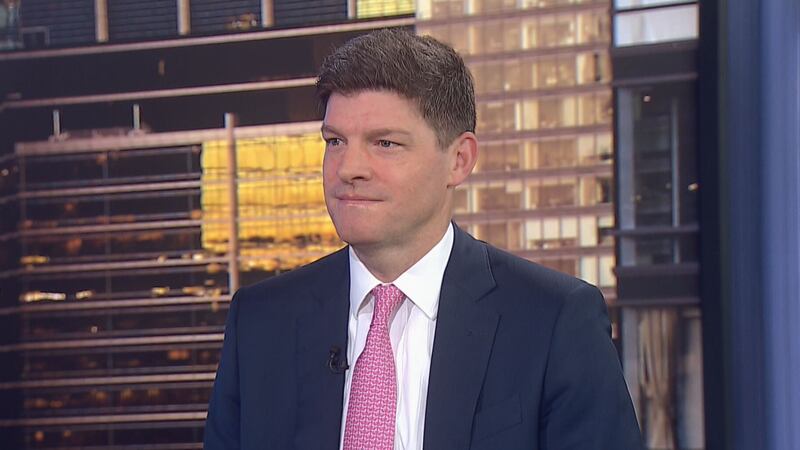
BNN Bloomberg spoke with Sam Baldwin, Senior Portfolio Manager, Canadian Equity at Guardian Capital LP, about how delayed supply impacts, rising fuel costs and sector positioning are shaping the outlook for companies and investors.
Key Takeaways
- Oil supply disruptions are still unfolding, with shipments sent before the conflict only now reaching markets and little replacement supply behind them.
- Physical shortages, including potential jet fuel constraints, are emerging despite futures markets suggesting more stable prices ahead.
- Companies are responding with fuel surcharges, but prolonged cost pressures could turn temporary measures into permanent price increases.
- Higher energy costs are expected to flow through to consumers, adding to existing pressure from elevated interest rates.
- Portfolio positioning is favouring energy beneficiaries while avoiding index concentration, with a focus on high-quality companies outside banks and on long-term growth areas like space infrastructure.
Read the full transcript below:
ANDREW: Investors seem confident that the U.S. and Iran will reach a peace deal. North American stock futures are trending higher after both the S&P 500 and the Nasdaq closed at new records yesterday. We’re joined by Sam Baldwin, senior portfolio manager in Canadian equity at Guardian Capital. Great to see you.
SAM: Great to see you, too.
ANDREW: And you’d like to remind investors that we’re only now seeing oil that was shipped prior to the war, or prior to the run-up in prices anyway, reaching gasoline pumps. So this price shock is still working its way through the system.
SAM: Absolutely. Supply chains take time to flow through, and so we’re hearing that the last ships that left the Strait of Hormuz before this shutdown are arriving at their destinations. And there’s nothing behind those ships for the markets that are fed by Middle East oil. We hear about that in Asia and Australia.
And then, of course, you have the time to refining. But from that point onwards, there’s going to be genuine shortages. Even in places like the Philippines, there’s been a national emergency declared, and they’re saying, “Please don’t fly here from overseas. You might not be able to fly back.”
So the fear of a shortage is disconnected from what we see in the futures price, which portrays a common oil price several months out from now. We’ll see how things settle out.
ANDREW: Yeah, and you touched on this — in some markets, it looks like they just may run out of fuel.
SAM: Yeah, the possibility, for example, of jet fuel shortages is there. I was reading recently about the last cargo from the Middle East to Copenhagen having been sent. So we’ll see how we can unclog this main artery flow of products and oil through the Middle East, and whether we can get those reservoirs and storage areas filled up in order for commerce, flights and, quite frankly, economic activity to go on uninterrupted. But there’s a risk that we could see interruptions.
ANDREW: What are you doing with your portfolios then to adjust for this?
SAM: One of the things is, in a situation like this, you’re going to have beneficiaries. Obviously, in this case, it’s the oil companies, and companies in our portfolio like Suncor and Canadian Natural Resources are benefiting from higher prices. We’ve seen that in the stock price, and they’ll be able to pay down a lot of debt and have free cash flow that they can use for buying back shares and other things.
But then you’ve got other companies that are having to react to the rising cost impact. One of our companies, Maple Leaf Foods, has announced a fuel surcharge, where they’re charging $2,200 for every large shipment of food that goes in a large truck to its end delivery points — think grocery stores and distribution centres — and that will have to be passed on to the end consumer.
So we’re seeing surcharges right now. You see that in airplane tickets and the like. The idea of a surcharge is that it deals with a cost increase that’s temporary and might go back down again. But if we see very sticky, higher oil prices because of supply disruptions — and for some sources of oil supply, they’ve actually been shut in, particularly in the Middle East — it remains to be seen how easy it is to turn that back on again. So we’ll see whether it materializes into permanent price hikes or just the appearance of surcharges.
ANDREW: Our stock index is very heavily weighted to banks and energy, and you have a substantial energy weighting, but you’re underweight banks?
SAM: In the Canadian focus strategy, we don’t own any of the big six banks. The idea is that we want to invest in Canada differently, so we don’t use the index as a starting point for investment and portfolio construction.
We’re actually looking at what are the companies that are as good in the world as any company, but they just happen to be Canadian, and are thriving and trading at attractive valuations right now. So this isn’t a comment on the quality of the banks in Canada — they’re among the best in the world. This is a comment on where we see the best opportunities.
We are not connected to the index construction in terms of our portfolio construction, so we can invest anywhere. If you take a company like Brookfield, they’re as good at what they do as anybody else in the world — they just happen to be Canadian. Or MDA Space, which is a much smaller company but growing very fast, and they’re making digital satellites at a level that you can’t find elsewhere.
ANDREW: Right. I mean, that’s interesting — you’re not a slave to the index, and of course, that’s what money managers are paid for, to diverge from the index. But it’s kind of a gutsy call, not owning — it’s an unusual call — not owning any of the big banks.
SAM: There is a decision about what constitutes risk. In our mind, risk is the risk of an absolute loss versus being different than an index. What we want is to populate the portfolio with what we call “coiled springs.”
Those would be areas where we see pessimism built into current expectations versus what we see the possible future as being. So you have relatively little downside, but much greater upside. The risk you take on is timing, because you can’t control when one of these coiled springs will fire.
But you want to have, say, 20 uncorrelated coiled springs in the portfolio, and then you have good downside protection along with good upside capture over time. That idea is very different from saying, “I want to look like the index, but have a few more of this and a few less of that.” Those products are widely available, and investors who want that can gravitate in that direction, or simply buy the index.
What we’re saying is, if you want to go active and have a best-ideas approach, then there’s a different way to think about Canada. We have great companies in Canada, but our index is highly lopsided in three big sectors: financials, energy and materials.
ANDREW: Let’s have a quick look at MDA stock, because there’s a lot going on in space right now — not just the Artemis program, but endless launches of satellites, Jeff Bezos and Amazon coming up with their own rival string of satellites to challenge SpaceX.
SAM: Yeah, it’s extremely active. I remember when we first took a position in this company in the summer of 2023 and told investors, “Here’s one of our new ideas.” Talking about the space industry sounded extremely esoteric.
People had heard of Starlink, but companies that are making robotics and manufacturing satellites for new constellations — that are going to help your phone do texting, and eventually talking and streaming — this was a new concept.
But when you talk to the companies, they’re planning, preparing and winning orders for this already. This is something that’s coming down the pike, and it’s going to be a much larger industry in 10 years. We’ll look back on today and say, “Wow, that was very early in this awareness of the space industry actually being quite large and important.”
ANDREW: The SpaceX IPO will be a monster, we’re hearing.
SAM: Yeah, it’ll certainly be a very large IPO. We’ve heard about how they’re approaching trying to get immediate index inclusion, as well as not a free-float-adjusted index inclusion. We’ll see how that goes, but it’ll certainly bring more awareness to the space — pardon the pun.
We think MDA will do well purely on its fundamentals. Quite a lot of the space-oriented companies actually don’t make money, and MDA has a long history of making very solid margins, and they have a great pipeline of future business opportunities. So they should see continued success.
ANDREW: Reuters reporting that last summer there was a SpaceX outage, or Starlink outage, and it left a whole bunch of unmanned surface vessels just drifting in the ocean — military.
SAM: Okay, yeah, I think people will need multiple providers. So maybe they’ll buy into Canada’s Telesat, which is providing a good, high-quality low Earth orbit constellation.
ANDREW: Thanks very much indeed. Sam Baldwin, senior portfolio manager in Canadian equity at Guardian Capital.
---
This BNN Bloomberg summary and transcript of the April 16, 2026 interview with Sam Baldwin are published with the assistance of AI. Original research, interview questions and added context was created by BNN Bloomberg journalists. An editor also reviewed this material before it was published to ensure its accuracy and adherence with BNN Bloomberg editorial policies and standards.

