Canadian banks delivered stronger-than-expected second-quarter earnings, led by National Bank and BMO, with strength in capital markets and wealth management helping drive results despite concerns about the domestic economy.
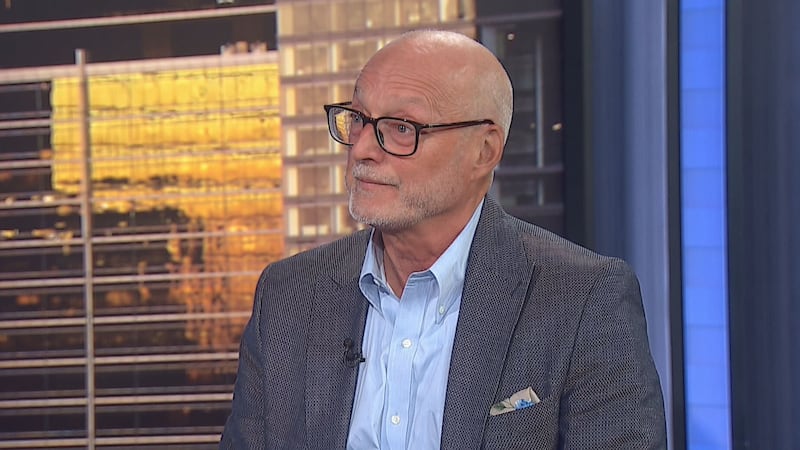
BNN Bloomberg spoke with Jim Thorne, chief market strategist at Wellington-Altus Private Wealth, about whether Canadian banks are benefiting from temporary earnings tailwinds, how Bank of Canada policy could affect growth and why energy security and Alberta’s referendum debate remain important issues for investors.
Key Takeaways
- National Bank and BMO reported stronger-than-expected quarterly results, supported by capital markets activity, wealth management growth and lower-than-expected credit losses.
- Jim Thorne said Canadian banks may be “over earning” as mortgage refinancing activity and strong capital markets revenue continue to support profitability.
- Concerns remain about the Canadian economic outlook for 2027 and 2028, particularly if higher interest rates further pressure consumers and businesses.
- Thorne warned the Bank of Canada could risk a policy mistake if it raises rates in response to geopolitical energy shocks tied to the Strait of Hormuz.
- Alberta’s referendum debate and broader energy security concerns could weigh on long-term investment decisions tied to Canadian energy infrastructure projects.
Read the full transcript below:
LINDSAY: Shares of Bank of Montreal are trending higher after reporting a 30 per cent rise in second-quarter profit year over year, and hiking its quarterly dividend, and National Bank beat expectations for its second-quarter profit and revenue. So, let’s get some perspective for more. We’re joined in studio by Jim Thorne, chief market strategist at Wellington-Altus Private Wealth. Great to have you in. Thanks.
JIM: Thanks for having me.
LINDSAY: Let’s start with National Bank. How would you rate the quality of the earnings beat you saw from this bank?
JIM: It’s a really nice top-line beat, you know, they’re making money in capital markets and investment management, which you would think. I think the question is, are they over earning? And, you know, Jamie Dimon in the States this morning came out and basically said banks are over earning because of what’s happening within the capital markets.
You know, we have a mix in Canada on loan-loss provisions, and, you know, really it comes down to what do we think the economy is going to look like in ’27 and ’28? And, you know, I think the Canadian banks are going to be okay. I think the earnings — like I worked for a bank in my previous employment — they can pick whatever numbers they want to generate through their accounting, right?
So Canadian banks are well managed, the dividends are safe, they’re very expensive, and they may be over earning, given what’s going to happen in 2027 and 2028.
LINDSAY: Are there repercussions, or when will we start to see the repercussions if they are over earning?
JIM: Well, we really need to see what’s happening with Prime Minister Carney’s economic strategy and industrial strategy, like you talked about, you know, what was it, the 40 planes that are going to be manufactured.
Look, there’s this old Monty Python skit called “The Parrot” with Michael Palin and John Cleese. I come up here, I worked in the States, I come up here, and everybody says that, you know, barely economic growth, full-time employment basically declining, is strong, and we have forward guidance from the Bank of Canada saying that we should raise rates because of what’s happening in the Strait of Hormuz.
Well, to me, the Canadian private sector in this country is the parrot in the skit, and the parrot is dead. Okay, and now you have the Bank of Canada coming out basically saying they’re going to raise rates because of what’s happening in the Strait of Hormuz.
Well, that is a classic Keynesian policy mistake, and the credit markets are going along with Macklem and saying they’re going to raise rates. So let me say, if the Bank of Canada starts raising rates, then the private sector that is already in a recession is going to be hurt further.
So that’s where I get a little bit conflicted. I think the banks are fine right now. We are standing in front of a massive policy mistake with the Bank of Canada if they go through with it, and then at the same point in time we really don’t know how quickly we can get projects, private-sector capital to come back into Canada to help rebuild and restructure Canada.
LINDSAY: I want to get back to that point in a little bit, because we do want to talk about that, but I just want to ask you about BMO as well, because when I asked you about National Bank — so BMO beat expectations, hiked its dividend. What were your takeaways from the earnings we saw?
JIM: Same thing, high quality, but look at they’re trading at a multiple of tangible book that we haven’t seen in decades. Wonderful company, okay, strong management, exposure to capital markets, right?
They’re over earning in their portfolio of mortgages up here because everybody’s refinancing their mortgages that were priced in COVID off the COVID lows. All Canadian banks are getting a push that goes away next year, so that’s why you sit there and go, they’re over earning right now.
The quality there is fine, and at the same point in time, are the loan-loss provisions, are they — you know, some are increasing, some are decreasing. What does ’27 look like? So, yeah, is it fine? Sure.
Should you want to sell them? Like up here in Canada, everybody loves the banks, right? Doesn’t matter what they do. Okay, dividends safe, extremely expensive, high-quality earnings, over earning. What does this look like in 2027 and 2028? Because if you’re allocating capital today into the banks, you’re making a statement about what’s happening next year and the year after.
LINDSAY: Were you surprised, like you say, with loan-loss provisions, some were increasing, some decreasing? Were you surprised to see that with the three banks that we’ve seen report today, and that they’re not kind of streamlined a little more about what they think the future holds?
JIM: Well, that’s capital markets, right? We have a divergence in views, but what I would say to you, I mean, the capital markets are thinking we’re raising rates. I mean, I don’t know. I mean, let me be.
Next time you talk to somebody that’s managing a book, ask them about all of the real estate products they have that are gated, okay? And so you sit there and say Bank of Canada is out there saying, “This is great, everything’s fine, real estate is good,” and then you have a product over here, a real estate product over here, that is gated.
So when I came back from the States, and I came up here, I said this is a train wreck waiting to happen. Now, what’s happening is that the parrot is dead, using the Monty Python analogy, and yet everybody’s around going, acting like Michael Palin, saying no, it’s not, the economy’s robust. It’s not. It’s not.
And the Atlanta Fed GDP tracker is going to have the United States real GDP tracking at about 4.5 per cent, and we’re bouncing along zero, saying happy days are here again.
LINDSAY: Okay, so I did say I wanted to get back to this point. You were talking about Canada, and the announcement that Prime Minister Mark Carney made today, how Canada is trying to allocate more capital. You’ve also been following Alberta’s plan for a referendum question on separation pretty closely. I wonder, how does that play into Canada trying to attract more investment at a time, you know, a lot of investment maybe won’t come to Alberta for a pipeline project if there’s thoughts of a separation, or, you know, if Alberta looks a little uncertain?
JIM: I think I think it forces the issue. Think about this, the issue of full couple of things. Well, we’ve got Mr. Guilbeault basically resigning, and I would suggest to you that he was a forcing function on carbon credits and having our industrial policy based off of the climate change, right, the Strait of Hormuz, and what’s happening basically has moved energy security to the top, and then we talk about the fact that, hey, you know, Germany’s going to sign that deal with Canada for LNG, but we’re going to ship it from the Pacific Coast. Why not have an LNG terminal in Eastern Canada, closer to the market?
So, this is a completely an example of people in denial of the structural decisions that we made over decades that are now coming home to roost. I think Mark Carney understands that. I think he’s got a cabinet that is still part of the Trudeau-NDP progress, extreme progressive left. He needs to manage it in my perverse way. I think the separatist movement in Alberta is providing him air cover to move back to the centre.
I think he’s very, he’s a reluctant pragmatist. He’s going to do it. The question, even going back to the banks, is, is this going to take too long to save the Canadian economy in 2027 and 2028? So, I think Carney’s doing as best as he can.
You know, I do not think they’re going to separate. I spend a lot of time in Calgary, but let’s be honest, folks in Calgary are really, really upset. This goes back to Peter Lougheed, right, and the Trudeau-NDP coalition that, that basically affected their standard of living for 10 years. It’s still, it’s still taste in their mouth, so I think it’s a helpful for us to structurally adjust.
So, I do, are they going to separate? I don’t think so, but I think it, it puts everybody on call, saying we need to adjust now, and I think things are happening in the right direction.
LINDSAY: Okay, we’ve got to leave it there. Jim Thorne, chief market strategist at Wellington-Altus Private Wealth. Thanks for coming in.
JIM: Appreciate it. Thanks for having me.
---
This BNN Bloomberg summary and transcript of the May 27, 2026 interview with Jim Thorne are published with the assistance of AI. Original research, interview questions and added context was created by BNN Bloomberg journalists. An editor also reviewed this material before it was published to ensure its accuracy and adherence with BNN Bloomberg editorial policies and standards.

