Geopolitical tensions, tariff threats and inflation concerns continue to create uncertainty for investors. Yet markets have largely remained focused on underlying economic fundamentals, particularly growing business investment tied to artificial intelligence.
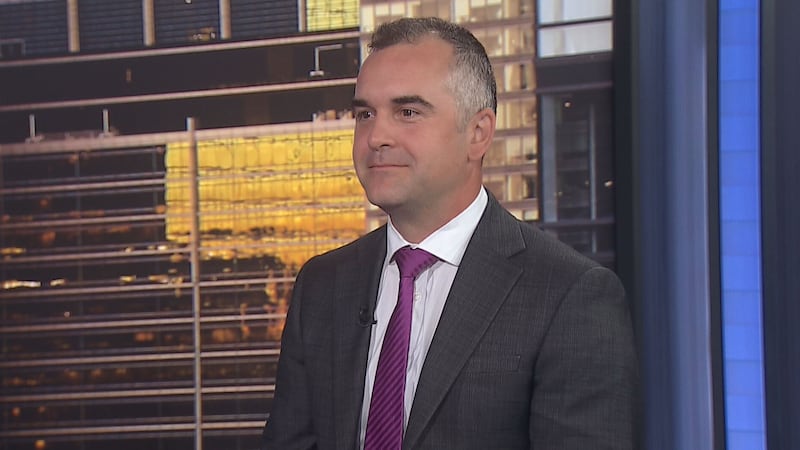
BNN Bloomberg spoke with David Onyett-Jeffries, economist and portfolio manager at Guardian Capital LP, who said investors are increasingly looking beyond headline-driven volatility and assessing whether AI-related spending and broader economic momentum can continue supporting growth.
Key Takeaways
- Markets are becoming less reactive to geopolitical headlines as investors focus more on longer-term economic fundamentals.
- Business capital spending, particularly investments tied to artificial intelligence infrastructure, is providing an important source of economic momentum.
- Semiconductor, hardware and data centre spending remain strong, although current growth rates are unlikely to be sustained indefinitely.
- The key risk for AI-related stocks is whether companies ultimately generate the productivity gains and returns investors expect from their spending.
- Markets view recent tariff threats largely as negotiating tactics ahead of CUSMA discussions, though policy uncertainty remains a risk.
Read the full transcript below:
LINDSAY: Markets appear to be rebounding this morning. After that selloff on Friday, there are still some dark clouds, though, looming over the markets as fighting renews in the Middle East. Inflation pressures bolster the case for central banks to hike rates, and investors worry that the rally in AI stocks may have gone a little too far. So, joining us now to give us his thoughts is David Onyett-Jeffries, economist and portfolio manager at Guardian Capital LP, and he joins us in studio. It’s great to have you. Good morning.
DAVID: Great to be here.
LINDSAY: Okay, so the war in Iran, it’s been going on for more than three months now. We’ve seen the repercussions, we’ve seen the volatilities. How are you factoring in geopolitical uncertainty when it comes to your investment strategy?
DAVID: See, and this is a really difficult environment because of the nature of these shocks. It is entirely possible, as we’re having this conversation, that we could get headlines about a resolution, at which point, you know, the volatility in the marketplace is very difficult to make day-to-day decisions. So, what we’re trying to focus on is the more longer-term fundamentals of the marketplace. As we’re seeing consistently on a global basis, and especially in the U.S., the underpinnings are in good shape. Consumers continue to be on sound footing. We have government spending ramping up basically across the world. And the big new development, relative to what we’ve seen over the last five to six years, is the business capital spending outside of Canada. We’re seeing a fairly large pickup as everybody looks to position themselves to be able to take advantage of whatever benefits may come out of the AI investments.
LINDSAY: I wonder, though, and I do want to talk further about AI investments, but just going back to what’s been happening in the Middle East. As you say, there could be talk of a peace deal, but we’ve heard that before and then nothing happens. We’ve seen that time and time again over the last couple of months. So, do you think there’s some immunity built in now to that uncertainty, and that’s why you’re seeing a strong kind of underflow, as you mentioned?
DAVID: Absolutely. I do think a lot of people, after a year and, what, six months of this new administration, where we have announcements and then backtracking, it’s smaller ripple effects every time. Like, it can’t be ignored because of who’s saying it and the position that these decisions are being announced. But the market is developing this immunity, where something happens and it’s not the same degree of knee-jerk reaction.
LINDSAY: Do you think, at the same time, though, the markets are kind of discounting the severity of the disruption of the Strait of Hormuz and what that could do down the line?
DAVID: I do think so. Right? Well, that is one of the issues that we’re at hand. The assumption is that we’re going to have a resolution sooner rather than later, and the more rapid that we have that, and the de-escalation that comes, and oil prices fall as a result, and, you know, the knock-on effects from an inflation standpoint are de minimis. You know, that’s sort of what the market’s assuming. But as we’ve seen now, we are, what, three months into this, three and a half months into it, and we’re not necessarily closer to an end game than we were, right? So the longer this goes, and to the degree that it can escalate, you know, the knock-on effects are larger. The effect on policy is going to be more significant. The effect on growth is going to be more significant. But again, we still are taking this relatively sanguine approach where, sooner rather than later, can’t necessarily say next week or a month from now, but the assumption is by the end of this year we’re not going to be talking about the Middle East to the same degree, and the closure of the Strait of Hormuz.
LINDSAY: Okay, let’s move on then to tech stocks and AI, as we were talking about earlier. You say the rally in tech stocks is definitely unsustainable. Explain why you think that first.
DAVID: I wouldn’t say definitely unsustainable, but when you have things that are growing at sort of asymptotic rates, are you going vertical? Right? There is this assumption with AI that if you talk to the AI evangelists, that it’s going to have an infinite impact, is going to be impacting our everyday lives and have huge productivity gains impacts, right? But the reality is it’s somewhere in between that zero and infinite. And right now, the market pricing, even if you’re looking at how the investment, like the actual investment, is going in. If you look at sales of global semiconductor chips or integral parts of the hardware that sort of drive the AI capabilities, you know, they’ve gone vertical, right? One hundred per cent year-over-year growth, which is not sustainable. There’s just not enough inputs or demand to keep that going. But the reality is, with data centre construction, you know, it is going to slow over time, but for the near term, we see this lift.
The real concern, as it comes to AI and the AI stocks in particular, is are we going to see these benefits from the investment, right? If we do start seeing this of this extreme magnitude, because the market’s sort of trying to balance it out, you’re going to see some retrenchment if it doesn’t sort of meet these lofty gains. And we’ve seen that with some company earnings, where the earnings themselves are spectacular, but the guidance isn’t as strong as the market was anticipating, and you get sort of a retracement in the stocks there.
And this is sort of the normal ebb and flow, and especially when you have a new technology. Everybody wants to race to get ahead of it, but you have a little bit of froth in the marketplace, and it takes time. And if you’re trading, that’s where it’s problematic. But if you’re an investor, chances are five, 10 years down the road, you know, you’ve made a profit on your return. It’s just in the near term, you can have a little bit more volatility.
LINDSAY: I was going to ask you, like, what would signal to you that AI investment is not paying off? And I guess is that part of it then, or is that most of it, what you’re seeing in an earnings report and in terms of their outlook?
DAVID: Yeah, and it really comes down to sort of the broadening out as the adoption of AI technology. As investment in hardware broadens, as you have more and more company earnings calls, and if they start mentioning we’re not seeing the productivity gains that we are anticipating, we’re not seeing the return on investment that we’re hoping, that can create sort of that negative cycle where people who otherwise would invest maybe are going to scale it back, and just the earnings expectations as a result. And if you’re not seeing those productivity gains, they aren’t necessarily going to pan out.
We haven’t seen that yet. I view that as more like a medium-term thing because, you know, it takes a while for the investment to be in place, and then you actually see that start to pay off. They always do like the J-curve. You see the investment initially, you’re negative, and then things turn around. If down the road we don’t see sort of that shift, which again isn’t quite what we’re seeing yet, there’s nascent signs that things are actually going very well. But it’s again to be determined, which is one of the risks in the marketplace and why you have sort of the large oscillation in the AI-related names when we have sort of the headline shocks.
LINDSAY: I want to get back to some other geopolitical potential risks for the markets, and that is tariffs, which are back in the headlines with an additional potential 10 per cent on a lot of goods for Canada that are not covered under CUSMA. How seriously do you think markets should take this, both in the U.S. and in Canada?
DAVID: Again, this is a situation where, especially as it comes to tariffs, over the last year we’ve seen a lot of ebb and flow when you’re into negotiations, which Canada is with the U.S. right now, and Mexico joining, and part of that as they renegotiate CUSMA, USMCA, whatever you’re going to call it. You can argue that this is a negotiating tactic. The president of the U.S. is known for hardball. He makes very aggressive moves, especially on the tariff front. When you’re negotiating with someone like Mexico and Canada, as the U.S., you have a lot of power, right?
But as we’ve seen, this isn’t necessarily going to go through, so the market doesn’t fully appreciate or fully price it in. But it’s one of those things you need to sort of flag and add it to your decision-tree risks. As we move into negotiations, the July 1 deadline doesn’t look like it’s going to come to pass, but that’s not a surprise. It’s more looking further down the road when we have the congressional turnover at the end of next year, starting in January after the election in November, that you’re really going to start seeing the meaningful negotiations possibly starting to take hold.
LINDSAY: Okay, we’ll leave it there for now. David Onyett-Jeffries, vice-president of economics and multi-asset solutions at Guardian Capital LP. Appreciate you coming in. Thanks so much for joining us.
DAVID: Thank you very much for having me.
---
This BNN Bloomberg summary and transcript of the June 8, 2026 interview with David Onyett-Jeffries are published with the assistance of AI. Original research, interview questions and added context was created by BNN Bloomberg journalists. An editor also reviewed this material before it was published to ensure its accuracy and adherence with BNN Bloomberg editorial policies and standards.

