Inflation pressures tied to energy costs, tariffs and the rapid expansion of artificial intelligence infrastructure could keep policymakers cautious on interest rates despite expectations that some cost pressures will eventually ease.
BNN Bloomberg spoke with Dec Mullarkey, managing director of investment strategy and asset allocation at SLC Management, about the Federal Reserve’s upcoming meeting, the inflationary impact of AI investment, the outlook for oil prices and investor enthusiasm surrounding the SpaceX IPO.
Key Takeaways
- The U.S. Federal Reserve is expected to leave interest rates unchanged as policymakers assess inflation pressures from energy costs, tariffs and AI-related investment.
- Artificial intelligence infrastructure spending is increasing demand for materials, chips and labour, creating additional inflation risks across the economy.
- Oil prices could remain elevated through year-end as inventories are rebuilt and energy infrastructure recovers, even if geopolitical tensions ease.
- Fed Chair Kevin Warsh may favour looking through temporary inflation pressures, but he faces a committee that has become more hawkish as economic data remains firm.
- Strong retail demand is expected to support the SpaceX IPO, although some institutional investors remain cautious about the company’s governance structure.
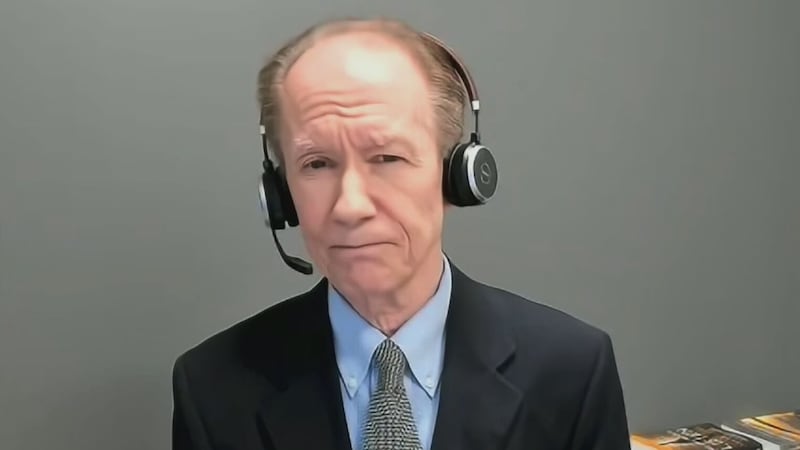
Read the full transcript below:
ROGER: All right, the markets are mostly in the green today. The Nasdaq was trying to find its way. I don’t know where it can. We pull it up for a sec. Where is it right now? It’s hovering just below, in the red a little bit, but maybe it’s gone into the green as we await. No, now the S&P 500 has joined in. You can see the Nasdaq’s dropped even more. All this as we await the SpaceX IPO to start trading. Joining us now to share his take on the IPO is Dec Mullarkey, managing director of investment strategy and asset allocation at SLC Management. Dec, thanks very much for joining us.
DEC: Roger, great to be here. Very historic day.
ROGER: It really, I mean, it really is, because, you know, I mean, he’s such a polarizing figure. The company, there’s so many questions about it, yet it’s still going to come in. I mean, it might come in, it might hit $2 trillion. Is that possible today?
DEC: It’s probably not possible today, but, I mean, it is starting off. I mean, the pre-market indicators, and these are gathered from various sources, show it could probably be up 20 per cent, which isn’t unusual for a tech stock on the first day. That’s kind of where they’ve opened in the last 10 to 15 years. A year from now, many of those are, a year after, many are down, or a third of them are down below that. But, yeah, that strong open is expected. There’s always a lot of this pent-up enthusiasm. Everybody wants to get out there, kind of a price discovery going on, and there’ll be a lot of trading back and forth during the day. So we’ll see how all of that goes.
And again, you know, you had mentioned in the intro the retail bid. That’s been a big part of this as well. So we’ll see how retail investors stay committed to this as we go through the next several months.
ROGER: And Musk pushed for what, 30 per cent of the shares to go to retail investors. What’s his reasoning for that? Is it the people who, those individuals who follow him and love him?
DEC: You know, that’s a big part of it. They’ve definitely been an incredibly committed base to Tesla, so he’s taking his cue from that. The other thing is, because normally in an IPO they only are five to 10 per cent, and the bankers sometimes have a say on that. In this case, it was interesting how Musk really, really controlled this, and just given its size, he has that power.
But he kind of pushed back and said, “No, I want this dedicated kind of allocation.” In advance of that, which was uncharacteristic, JPMorgan did a rollout with their wealth management platform, and Jamie Dimon actually was involved with a Q&A with Musk. Musk was there virtually. They went back and forth, discussed all of what was happening.
You see other big players like Fidelity lower their minimum caps for people coming in and setting up accounts to participate. So there was a lot of enthusiasm across the board for this.
But, you know, to your point, yeah, Musk has a lot of confidence they will follow his lead, buy into his vision. They won’t be as picky on some of the things, because one thing institutional investors have here is when they look at the corporate governance, which says that Musk will control 85 per cent of the voting shares and can never be fired. That’s a tough one for institutions, who like oversight and checks and balances. This one is a lot more free-range than that.
ROGER: And it is fascinating, but, I mean, for the retail investors, will they like that? I mean, you know, because then they know Musk is in charge. There’s not going to be somebody in the background pulling some strings or telling him you can’t do that.
DEC: Yeah, you’re nailing it there. That’s exactly the appeal to them. Institutional investors would say that’s a bug in the system. They would say, “Wow, what a benefit.” We just absolutely love the fact that he’ll get to implement his vision over whatever period of time he needs and wants, and that’s all a good thing for them.
So that’s exactly where they fall. I mean, they unequivocally feel he has the Midas touch, and that’s the reason they’re going into it. They’re not so concerned about the valuation and all of that. Some of them are, of course, tactical traders, and they will be playing the momentum as well.
But that’s a big part of the Midas touch they feel Musk brings to that. That’s a big, big benefit to them, and they see through that. That’s what they’re going on.
ROGER: And is it a factor at all that it’s on the Nasdaq, on the Russell 1000, but not on the S&P 500? They’ve stuck to their guns.
DEC: Yeah, that’s an important point. You’re absolutely right. And just to elaborate, the S&P 500, which really would be much more kind of an institutional benchmark in terms of what managers manage against, stuck to its guns.
They canvass their participants, if you will, because all of these players get fees from people using their index. So they must have talked to their managers, and they basically said, “No, we want you to stick to your guns,” which is to say, you don’t include anyone until they have a year’s worth of profits and they’re operating.
It could be a couple of years before SpaceX gets to that point. So, in a sense, the S&P is more institutionally driven, and it’s also an alternative if somebody wants an index ex-SpaceX. So yes, that absolutely plays into it.
ROGER: All right, and with AI, I mean, because the big argument is SpaceX, in many ways, is an AI company. Are we getting into an era where people are actually having to think about how much they’re spending on AI, and maybe they’re spending too much?
DEC: Well, that’s the big thing. There’s three pillars that Musk is bringing here: he’s bringing the space travel, he’s bringing the satellites, which do make money, and then he’s buying this catch-all for AI.
SpaceX is well behind on AI, and he keeps showing that’s the big addressable market, but they are burning through like $14 billion of cash a year. So let’s say about $1 billion a month. They need to fund those ambitions, so they’re far behind. That would be the one that I certainly would have the biggest question mark around in terms of implementation.
Which leads to another wrinkle in the story. Most of the Street is expecting that it’s not a question of whether he will roll Tesla into this whole conglomerate, it’s just a matter of when. And they, of course, generate maybe $6 billion in cash a year, so there might be a reason to bring that into it.
So that muddies the water further down here as to you’ve got all these businesses, not sure who’s subsidizing who. That also becomes a sticking factor. But again, a lot of investors might see that as a benefit to doing a rollup like that.
ROGER: All right, and let’s just do a little pivot for a sec, talk about oil and inflation and the pressure it’s creating. Where are we looking with that? We may have another deal, and then, of course, let’s bring in the Fed and Mr. Warsh and his job.
DEC: That’s right. He goes to work next week. Well, maybe we talk about Warsh quickly on that front. He does come to work next week in terms of running his first meeting and will face reporters after that, so they’ll dig into what his vision is and what he intends to do.
He is joining a hawkish Fed, though. The Fed unequivocally feels at this point, because of what’s happening with oil and how that’s pushed up prices, that even if we get a deal today, there’s a lot that actually has to happen before oil prices come down.
The expectation is that before the end of the year, you could still be in that US$80 to US$90-a-barrel range for Brent. They will still stay high because things have to normalize. You have to probably repair some of the equipment in the region, and everyone will be rushing to beef up inventories because they’ve drawn them down.
Some will do that just because of caution and wondering how long this deal might last, or whatever the case may be. So there’ll be all of that. There will be oil pressure.
Warsh will be urging the Fed to look through this. I’m not certain they will. He is only one vote. He has to win their credibility, so he won’t take such a harsh stance, I think, out of the gates. Of course, he’s got the White House that wants him to cut at some point or other.
So I think at this point they’ll stay on hold, just see where the data flows in. But the inflation picture is not just oil, and if that goes away, there is some coming from other factors, particularly the AI buildout that’s putting a lot of pressure on materials, inputs and labour as well. And, of course, tariffs are still a factor there.
Now, they will probably fade, but the AI buildup and the cost of that is going to flow through and could spill over to a broader basket of goods because chips are in such demand. They’re used in pretty much every handheld device out there.
A lot of interactions here, and that’s why they need to have time to see how all of this plays out.
ROGER: All right, so it’s going to be interesting, I guess, is the best way to sum it up. Dec, we’ve got to go there. But thank you very much for joining us. Appreciate it.
DEC: Thank you.
ROGER: Dec Mullarkey, managing director of investment strategy and asset allocation at SLC Management.
---
This BNN Bloomberg summary and transcript of the June 12, 2026 interview with Dec Mullarkey are published with the assistance of AI. Original research, interview questions and added context was created by BNN Bloomberg journalists. An editor also reviewed this material before it was published to ensure its accuracy and adherence with BNN Bloomberg editorial policies and standards.

