Small-cap stocks have quietly outperformed several major benchmarks over the past year, prompting some investors to revisit an asset class that has lagged for much of the past decade. Concerns about market concentration and elevated expectations for AI-related companies are also driving interest in areas outside large-cap technology.
BNN Bloomberg spoke with Miles Lewis, portfolio manager at Royce Investment Partners, who discussed why he believes small caps are in the early stages of a durable leadership cycle and highlighted three stock ideas he sees as attractive long-term opportunities.
Key Takeaways
- Lewis believes small caps are beginning to outperform large caps and could remain leaders for years if a new market cycle is taking shape.
- He sees opportunities in consumer staples and health care, while remaining cautious on semiconductors and hardware despite enthusiasm surrounding AI.
- Lewis argues market concentration has created attractive valuations across many small-cap companies that have been overlooked by investors.
- Advance Auto Parts and Nomad Foods are viewed as turnaround stories with improving fundamentals, new leadership and favourable industry trends.
- Lewis believes CBIZ is being unfairly discounted because of AI concerns and points to a large valuation gap between public and private market transactions.
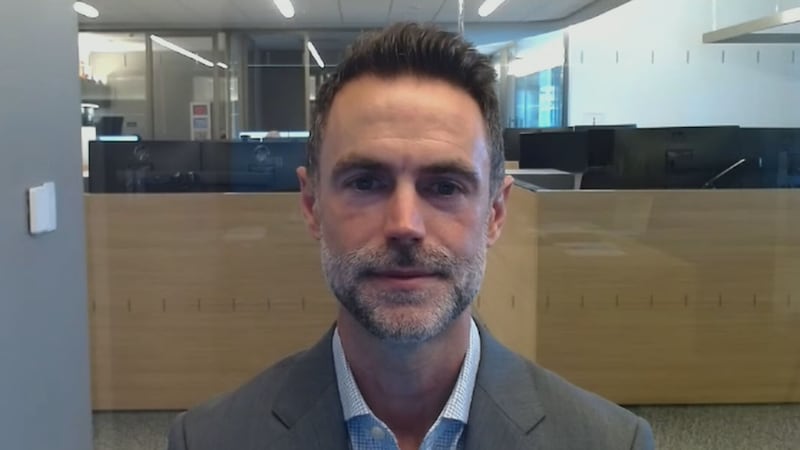
Read the full transcript below:
ROGER: Despite the recent rally in AI-driven large-cap stocks, my next guest says the baton is now being passed to small caps, and he’s steering away from tech, especially semiconductors and hardware. Let’s bring in Miles Lewis, portfolio manager at Royce Investment Partners. Miles, thanks very much for joining us.
MILES: Thank you for having me on, Roger.
ROGER: When you say you’re steering away, are you doing a 90-degree turn and heading the other way? Are you kind of just keeping it in the side mirror there?
MILES: We have a pretty disciplined investment process. We look for high-quality stocks that are undervalued and kind of out of favour. Our process just isn’t taking us toward tech, particularly semis and hardware.
There’s a lot of mediocre businesses in that space that are riding the wave of AI, where the market seems to be pricing in peak margins into perpetuity, and these are still pretty deeply cyclical businesses.
It’s not necessarily that we’re avoiding it. It’s just that our process doesn’t take us there. We don’t see a lot of opportunity there at the moment.
ROGER: Okay. And then small caps are what’s got your attention right now? What are you liking about them?
MILES: Well, take this with a grain of salt. We’re a small-cap shop, but we’re very constructive on the asset class, probably the most that we have been in quite some time.
I think it would probably surprise a lot of your viewers to know that the Russell 2000 has beaten the Nasdaq, the S&P 500, the Dow and the Magnificent Seven over the last year.
We think that’s the kind of environment where the baton is beginning to be passed from large caps to small caps because you don’t typically see that level of sustained outperformance when you’re not at some sort of inflection in terms of the market regime.
While the low-hanging fruit has been picked over the last year, what’s important for your audience to know is that small-cap cycles tend to be durable. Over the last 100 years or so, large caps and small caps have kind of taken turns going back and forth in terms of leadership in the market.
When you have a small-cap cycle, they tend to last eight to 10 years, sometimes 12 years or more. We think we are in the very early innings and that small relative to large in U.S. equities looks like a great bet for the next five to 10 years.
ROGER: Could tech change that? You said over the last 100 years you’ve seen those cycles happen, but could there be factors that make this different, or does it look like it’s playing out the way most cycles do?
MILES: This is kind of what you see at the beginning of a transition in leadership.
We’ve had quite a few head fakes over the last five or six years where we’ve had these brief spurts of outperformance. This one has been more sustained and more durable.
While it’s being talked about a little bit in the broader media and investment community, I think it’s still somewhat of a stealth rally. There’s a lot of incremental buying that’s yet to come into the space.
Importantly, on the other side, given the concentration at the high end of the market, there’s just so much market value there that can serve as a source of funds for small caps when and if people begin to make those allocations toward the asset class.
ROGER: And what sectors are you looking at more than others?
MILES: On the flip side of the tech discussion, our process is taking us to places like consumer staples. That’s an area where historically we’ve done very little, but over the last year or so we are seeing lots and lots of opportunities on a relative basis.
Performance-wise, it’s about as bad as it gets. We think there’s some opportunity being created there.
It’s a similar story in health care. We’ve been finding lots of opportunity in health care over the last few months, and that’s an area where we haven’t done a lot historically.
I would also say that while we haven’t done anything yet, we are certainly sniffing around software. With the well-documented “SaaS-pocalypse” of the last few months and the opportunities, or potential opportunities, being created there, we are taking a hard look at some business models.
But with the AI overhang, obviously we’re going to tread carefully and be patient and try to find the right spots.
ROGER: All right. You’ve got three stocks you’ve got your eyes on. Advance Auto Parts. Let’s talk about that first.
MILES: People may know O’Reilly and AutoZone. Advance is the No. 3 player in the space.
It’s a great business with a great industry structure. It has not been a well-run business over time, unfortunately, but they have a new CEO who’s been there for a couple of years and is implementing a very impressive turnaround.
They also have the tailwinds of a great industry structure in the backdrop right now. The average age of the car on the road is about 13 years today, and that’s getting older.
It’s happening because of interest rates and inflation. Cars are being driven longer, which means more repair and maintenance. That’s a good thing not only for Advance but for the entire industry.
If they can get to their aspirational margin goals over the next couple of years, and our research suggests they should be able to do that and then some, the stock could double from here.
ROGER: All right. I drive a 33-year-old car, so I might go shopping there.
Nomad Foods.
MILES: On the other side, another consumer name. This is the largest frozen food manufacturer in Europe.
About two-thirds of their portfolio is in protein and vegetables, which is important given the negative stigma around packaged foods and broader healthy-eating trends.
It’s another company that’s a great asset but hasn’t been very well run and now has a new CEO.
Their category is growing in the low single digits, so they just have to do some basic blocking and tackling, like updating packaging and working more closely with retail partners, to have success growing the business.
It’s probably one of the cheapest stocks in our portfolio. It trades at less than six times earnings, pays a seven per cent dividend, and we would expect both top-line and bottom-line growth over time.
It’s being priced as if it’s a melting ice cube.
I would also add that there’s been a significant amount of insider buying from senior management and the board, which we love to see.
ROGER: Okay, and we’ll sneak the last one in. CBIZ.
MILES: CBIZ is an audit and tax firm. It’s a publicly traded version of the Big Four — KPMG, PwC and those types of firms.
It’s a great business and a perceived AI casualty. The stock is down 40 per cent, but we’ve spoken to dozens of customers and customers of their competitors, and we think the market has it backwards.
We think AI is going to be a huge boon for this business, with expanding margins and accelerating top-line growth over time.
It’s also a great example of some of the disconnects we see in the small-cap market between private and public multiples.
Private equity is still acquiring these assets at 12 to 14 times EBITDA, so they’re comfortable underwriting the AI risk. CBIZ trades at seven times, so we think it’s a pretty compelling value.
ROGER: We have to wrap it up there, Miles. Thanks very much for joining us.
MILES: Thank you for having me.
ROGER: Miles Lewis, portfolio manager at Royce Investment Partners.
---
This BNN Bloomberg summary and transcript of the June 24, 2026 interview with Miles Lewis are published with the assistance of AI. Original research, interview questions and added context was created by BNN Bloomberg journalists. An editor also reviewed this material before it was published to ensure its accuracy and adherence with BNN Bloomberg editorial policies and standards.

