The first half of the year ended with equities near record highs, but investors face several potential catalysts that could drive volatility in the weeks ahead. With quarter-end rebalancing, earnings season and key economic data approaching, patience may be the most valuable strategy.
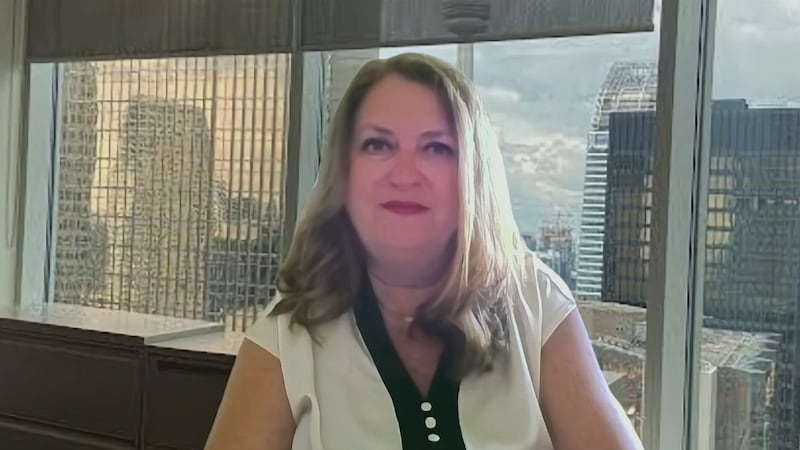
BNN Bloomberg spoke with Diana Avigdor, portfolio manager and head of trading at Barometer Capital Management, about why investors should resist making major portfolio changes, what she is watching as second-quarter earnings begin, and why Canadian banks continue to attract global investment flows.
Key Takeaways
- Quarter-end portfolio rebalancing, holiday-thinned trading and the start of earnings season could increase volatility over the next several weeks.
- Investors may benefit from waiting for more earnings and economic data before making significant portfolio changes.
- Second-quarter earnings will be closely watched for signs that higher oil prices affected corporate profit margins.
- Leveraged ETFs and crowded positioning could amplify market swings if sentiment changes quickly.
- Canadian banks continue to attract global capital because of strong regulation, high returns on equity, conservative provisioning and increasing international ownership.
Read the full transcript below:
LINDSAY: As I just said, today marks the end of both the second quarter and the first half of the year for financial markets. It’s an ideal time for investors to take stock of what has worked, what hasn’t and what may lie ahead. Our next guest says that after a volatile start to the year, investors whose portfolios have performed well may be best served by avoiding the temptation to make major changes. So let’s bring in Diana Avigdor, portfolio manager and head of trading at Barometer Capital Management. Good morning. It’s great to have you join us.
DIANA: Good morning, Lindsay. Thanks for having me on.
LINDSAY: So what is your take on the direction of the markets as we head into the second half of this year?
DIANA: Really, there are so many moving parts. If this is a season that gets to be really quiet and could be volatile, I’m talking about July, let’s say the next two, three, four weeks. Coming into this week, for example, we have month-end, quarter-end and semiannual, and markets have done so well that there is a risk of pretty high rebalances. Asset allocators that have a certain asset allocation that they need to adhere to, calculations are quite high for the selling of equities to rebalance. That is to take down your overperforming equities in order to bring yourself back to the weight. That’s a form of profit-taking, so in the market that’s going to continue and possibly happen here for the semiannual. Also, we have a holiday week. We have Canada closed tomorrow and the U.S. closed on Friday, and we’re ahead of a very important earnings season. Not that any earnings season is more or less important, but we’re coming back to a first quarter that was extremely excellent, and surprisingly so. Not that expectations were low. Expectations were high, and then earnings beat even that. So the expectations for the second quarter, how do you compare to the first quarter? We’ve had that war, and now oil is back to $70. That’s okay, but we had some elevated oil prices, so we’ll see how that plays out. So lots of moving parts. If you can sit on your hands and keep dry powder until things become more clear, I would recommend that at this point.
LINDSAY: That’s what I want to ask. Within the next two to three weeks, roughly, you’re saying investors, it’s maybe a time to not do anything at all. Why is that? Is it just because, as you just laid out for us, there are so many factors, there’s still so much volatility and a lot going on?
DIANA: Yeah, I would like to see this week over. I would like to see the holidays over. I would like to see the rebalances over. I think some of the strength and volume on Friday pulled some of that rebalancing forward, but still there is about $200 billion in levered ETFs. I don’t know if people talk about these levered ETFs, but these are ETFs that give you three times the exposure of certain indices. They have been a big push in the market, and so to the extent that they can also travel on the way down, I would like to see if there is a trigger that exacerbates the direction. So when we go into the earnings season, I would like to see it start and see how it goes. See how the first few important companies report. We’re going to start with the banks. You’re going to follow with the large-cap tech, the Mag 7 and all that. I would like to see at least a quarter of the earnings come out and see how the market reacts, especially that we’re at such high levels. I would like to see some companies talk about what happened in their quarter to their costs, given what happened with oil, and whether they’ve been able to push some of that forward and are able to maintain their margins. So I just want to get some information out of the market. We have a portfolio that has been working well. We have some dry powder, and at this point I would just like to gather some information.
LINDSAY: In the meantime, though, your top sectors are financials, followed by industrials. You also like the Canadian banks. Tell us why you like these ones.
DIANA: You know, the Canadian banks are a special animal at this point, not to mention that they’re managed very well. Their capital markets have done so well for them, and wealth management as well, given what the stock markets have done, the IPO book and all that stuff. They’ve set aside PCLs. They’ve managed themselves very conservatively. We have a regulatory environment that’s great, and so the way it’s managed, Canadian bank ROEs are much higher than other global bank ROEs. And then there is foreign ownership in Canadian banks at all-time highs. Foreign institutional ownership in the large Canadian banks has been rising over the long term. They are now almost 20 per cent. This is as of May 2026, and very much higher than it was, say, in the early 2000s. Why is that? Portfolios and asset managers over the last year, let’s say, have been diversifying globally, so everything ex-U.S., given the volatility, and Canadian banks, as part of the MSCI and the global exposure, benefit from these flows. Canadian ETF assets under management have just surpassed $1 trillion. That’s a big number for Canada. The banks are getting some of these global flows as well.
LINDSAY: And just lastly, speaking of banks, U.S. bank earnings are just around the corner. In the last minute or so, what are your expectations on that?
DIANA: I think that the U.S. banks are going to reflect the economic growth that’s happening in the U.S. The stress tests that came out a week or two ago, they were all great, and so these banks are able to do their buybacks and their dividends. I think that’s reflective of the economy and the wealth management and the asset management, the stock market and the IPO book. I think the U.S. banks are expected to do well as well.
LINDSAY: All right, we will leave it there. Diana Avigdor, portfolio manager and head of trading at Barometer Capital Management. Always good to have you join us. Thanks so much.
DIANA: Thank you.
---
This BNN Bloomberg summary and transcript of the June 30, 2026 interview with Diana Avigdor are published with the assistance of AI. Original research, interview questions and added context was created by BNN Bloomberg journalists. An editor also reviewed this material before it was published to ensure its accuracy and adherence with BNN Bloomberg editorial policies and standards.

