Renewed fighting between the U.S. and Iran has pushed oil prices and the U.S. dollar higher, prompting investors to reassess inflation risks and the outlook for interest rates. The latest geopolitical tensions have also lifted bond yields and increased volatility across currency and commodity markets.
BNN Bloomberg spoke with Karl Schamotta, chief market strategist at Corepay, about how the renewed conflict is affecting currencies, oil prices and central bank expectations, what to watch in the U.S. Federal Reserve minutes, and why the Bank of Canada is still likely to remain on hold.
Key Takeaways
- The collapse of the U.S.-Iran ceasefire has pushed oil prices higher and increased volatility across currencies, bonds and commodities.
- Markets have raised expectations for additional central bank tightening as higher energy prices threaten to reignite inflation.
- Karl Schamotta expects some of the market reaction could reverse if the Trump administration softens its position in the coming days.
- The Bank of Canada is likely to leave interest rates unchanged because Canada’s economy remains weak and domestic inflation pressures are subdued.
- The Canadian dollar still benefits from higher oil prices, although its relationship with crude is much weaker than it was in previous decades.
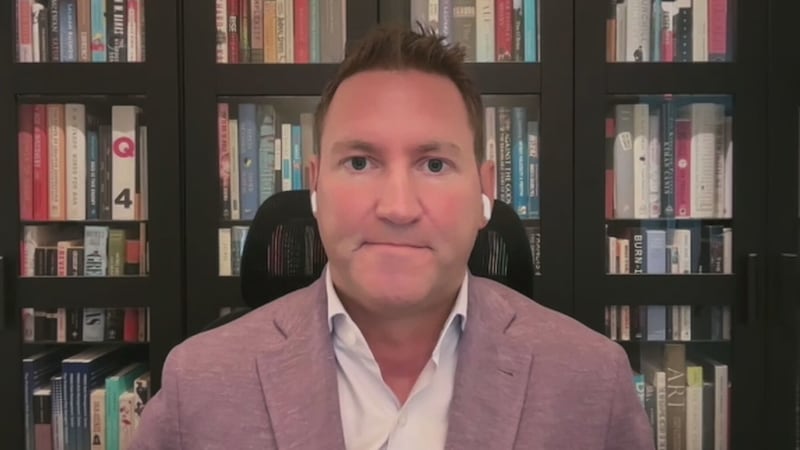
Read the full transcript below:
LINDSAY: The U.S. dollar is gaining ground, and oil prices are rising after a fragile ceasefire between the U.S. and Iran broke down, raising fresh concerns about geopolitical stability and threatening a recovery in global energy supplies. Let’s get more now from Karl Schamotta, chief market strategist at Corepay. Great to have you join us. Thanks so much.
KARL: Great seeing you, Lindsay.
LINDSAY: So, U.S. President Donald Trump saying, as far as he’s concerned, that the ceasefire is over. That’s causing oil prices to advance today. Obviously, what’s your take on this news this morning? Is it surprising to you?
KARL: It is a little surprising. You know, the funny thing over the last month or so is that both sides have been firing at each other fairly regularly. We’ve had missile strikes, drone strikes hitting ships, you know, with a pretty high regularity, and yet they both claim that the ceasefire was still intact. And so, you know, this morning we did see a bit of a departure from that, Donald Trump saying that, you know, he does not see the ceasefire still being intact. However, you know, he often does think out loud, so there may be an extent here to which we see this reverse in the coming hours and days. We could see, you know, Trump say that the talks are still ongoing and, you know, that the status quo is intact. And so, you know, we are seeing this big ramp in oil prices. We’re seeing a big ramp in inflation expectations, monetary tightening expectations, but it may be, you know, on very fragile ground here.
LINDSAY: What sectors are you going to be, like, obviously today we are watching airlines, energy stocks. Is there anything else that you’re watching today that you think could really, really move or see more volatility based on this news, whether, as you say, whether it’s just talk coming from Donald Trump or whether the ceasefire has actually broken down?
KARL: Yeah, so from my standpoint, I typically focus on currencies. But, you know, the big focus here is that we have seen that bump in global interest rates. Yields have popped higher in the U.S. and across most advanced economies overnight, and that’s really driven by this idea that, you know, higher inflation could force central banks to tighten more aggressively than had been anticipated, you know, for example, on Thursday last week. And so, you know, we could see that move continue, especially if we see, you know, the Fed minutes this afternoon sounding fairly hawkish. But I would be expecting some of that to reverse. And so, you know, what we’ve seen today in terms of the currency markets, in terms of the U.S. dollar advancing against most of its counterparts, some of that could unwind over the next 24 hours if we do see a more nuanced take coming from the Trump administration.
LINDSAY: Okay, I did want to ask you about the Fed minutes today and whether that could add fuel to the kind of hawkish shift under Chair Kevin Warsh. Like, are you expecting anything to come out of that? What will you be watching for?
KARL: Yeah, I think, you know, markets are definitely bracing for a really sort of hawkish record of the meeting. We don’t know at this point how much detail there’s going to be in there. Historically, it was a fairly complete, you know, summary of what policymakers were talking about. But Warsh said that he’s a little reluctant to provide that kind of, that kind of, I guess, information on what’s going on. And so, you know, we could see a more trimmed-down version. However, you know, at the time this was before the, you know, the memorandum of understanding was originally signed between the U.S. and Iran. Policymakers at the time were very, you know, concerned that inflation could threaten, you know, the Fed’s mandate, that employment risks were receding into the background. And so, you know, we’re going to hear that officials were more than ready to raise rates at some point this year. And so, you know, my question at this point is, is this still what policymakers think? You know, has the inflation backdrop eased a bit? And if so, are these minutes ultimately stale? But, you know, at the moment traders are ready to react to whatever the headline says.
LINDSAY: What about the Bank of Canada? We’ve got an announcement coming next week here. Do you expect the Bank of Canada will hold?
KARL: I do, yes. I think at this point here we have a very weak Canadian economy. You know, it is generating some positive gains. It is starting to grow a little bit more quickly, but at the same time it remains far below the pace that we’re seeing in the U.S. Inflation risks are very, very low. Most of the inflation coming in Canada is coming from imported prices, not from, you know, consumer demand or business investment. And so, for the Bank of Canada right now, the, you know, the course of least resistance is to keep rates where they are, to avoid tightening into a weak economy. And, you know, I would expect that that holds really for many months to come. So markets right now are priced for essentially 75 per cent of a rate hike by the end of this year. I do think that’s a little overdone. I think that we’re going to see the bank stay on hold, in contrast with some of its counterparts globally.
LINDSAY: And, as you say, you do focus on currency, so I want to ask you about the euro as well, because we’re hearing today that Marine Le Pen was cleared to enter the 2027 French presidential race. That’s the French far-right leader after a public office ban. How do you think this could affect the euro moving forward?
KARL: Right. So the amazing thing here is that, you know, there had been some worry in the run-up to the decision from the judiciary that the euro might fall. And the reason there is that, you know, historically Le Pen has lobbied for the breakage of essentially the euro bloc, you know, looking for France to exit the EU, looking for France to exit the common currency. But, you know, it does seem over the years that she’s sort of moved toward the centre a bit, that she’s not, you know, sort of forcing those very extreme views. And so, you know, at this point it looks like markets are sort of looking through this. They don’t expect this to be, you know, a big game changer for the bloc itself. And so the euro’s, you know, essentially holding firm. It’s trading in line with most of its global counterparts this morning.
LINDSAY: And it does not affect the loonie in any way. Is there any really correlation between the loonie and the euro?
KARL: There are correlations, but definitely not on the political side. We’re definitely driven by very, very different fundamentals. And, you know, the thing that we’re looking at right now is that the Canadian dollar is positively geared to crude prices, to oil prices in general, because Canada is a net energy exporter, while the euro is not. And so the euro is right there on the firing line this morning because oil prices are moving up now. I should say, of course, that the relationship between the Canadian dollar and oil prices is not what it once was. For many of the viewers of the station, you’re used to, you know, a couple of decades in which the Canadian dollar and the loonie traded, or the Canadian dollar and the oil price traded, like they were the same thing, basically. That is very much in the rear-view mirror. We’re not looking at that sort of dynamic anymore, but the Canadian dollar still does tend to benefit from higher oil prices in general.
LINDSAY: Okay, we’ll leave it there. Karl Schamotta, chief market strategist at Corepay, always great to have you on. Thanks so much.
KARL: Thank you.
---
This BNN Bloomberg summary and transcript of the July 8, 2026 interview with Karl Schamotta are published with the assistance of AI. Original research, interview questions and added context was created by BNN Bloomberg journalists. An editor also reviewed this material before it was published to ensure its accuracy and adherence with BNN Bloomberg editorial policies and standards.

