Finding attractive investment opportunities has become more difficult as geopolitical tensions, tariff uncertainty and questions around artificial intelligence continue to reshape the investing landscape. Investors are increasingly looking for ways to balance growth opportunities with more defensive positioning.
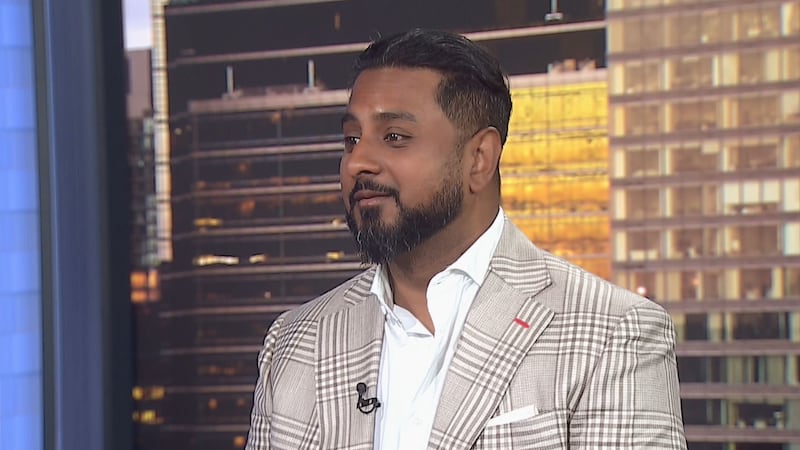
BNN Bloomberg spoke with Shiraz Ahmed, CEO of Sartorial Wealth, about his quantitative investment approach and three stocks he believes are well positioned to benefit from long-term trends across utilities, health care and cybersecurity.
Key Takeaways
- A disciplined, quantitative investment process can help remove emotion from portfolio decisions during periods of uncertainty.
- Infrastructure supporting AI, including electricity and power generation, remains an attractive long-term investment theme.
- Geographic diversification and exposure to health-care innovation can provide balance in an uncertain market environment.
- Cybersecurity demand continues to strengthen as AI expands digital risks for businesses.
- Software remains an area to underweight for now based on risk-adjusted return expectations, although that could change as market conditions evolve.
Read the full transcript below:
LINDSAY: Well, stock picking has become increasingly challenging this year, with investors navigating geopolitical tensions in the Middle East, questions about the sustainability of the AI trade and ongoing market uncertainty. So, how can investors position their portfolios in this environment? Let’s get some ideas from Shiraz Ahmed, CEO of Sartorial Wealth. He joins us in studio. It’s great to have you in.
SHIRAZ: Great to be here. Thank you.
LINDSAY: Okay, so obviously there’s a lot going on right now. There always is, but right now especially, it feels like it. How would you describe your approach to what you’re looking at and stock picking in this environment?
SHIRAZ: That’s a great question. I mean, we take a little bit of a different approach. So we’re primarily quantitative in nature. We run a proprietary algorithm that we made at our firm, and so that helps us make relatively dispassionate decisions. It’s all about, really, what do the numbers say? Is it a good idea or not? Not necessarily because I think so or anybody on our team thinks so. It’s really, does the number support that position or not?
LINDSAY: Takes the emotional kind of thinking out of it.
SHIRAZ: One hundred per cent, and that’s really one of the key things that all of us need to. I mean, I’m human. We work in this industry all day, every day, but we’re not immune to, you know, emotional factors. So part of it is to have checks and balances on even ourselves.
LINDSAY: Interesting, because sometimes you want to put your money where your mouth is, and that’s not always the best idea. Middle East tensions, is that a concern to you right now, particularly what we’ve seen flare up overnight?
SHIRAZ: So, from a macro perspective, absolutely. We have our finger on the pulse on it all, but it doesn’t necessarily impact how we invest. Now, one of the unique things about how our algorithm effectively breathes with the market, it tends to breathe depending on what geopolitical factors are happening because that’s often reflected in stock prices, which is really one of the major variables that we’re looking at.
LINDSAY: Interesting. When it comes to your clients, what are they most concerned about right now?
SHIRAZ: So, I mean, geopolitical tensions are absolutely a big question that everybody has. There’s also the future outlook for Canada in general as an economy, tariff concerns with the United States, USMCA is being renegotiated, so all these variables are all there keeping people up at night.
LINDSAY: Yeah, definitely. I’m also curious, when you talk about this algorithm and when you talk about the AI trade, that’s obviously another big story. What does your algorithm say about the AI trade and some of the chipmaker stocks? What does it say?
SHIRAZ: So, good question, and we’re more on, I would say, the picks-and-shovels side of the AI trade. You know, the obvious winners and losers, at least on the application side, it’s going to be very difficult to see. Time will tell. So, from our side, we’ve been playing some of the energy side of it, some of the power plays. We’ve also been playing some of the semiconductor plays as well. So there’s been a little bit different way, from our perspective, of playing the AI trade, but we by no means think that it’s over. Really, this is all about price. If it’s continuing on a risk-adjusted return basis to continue to move, we’ll participate.
LINDSAY: Is this still a market led by a handful of mega-cap stocks, do you think, or maybe not so because you say you like the picks-and-shovels side of it?
SHIRAZ: So, from our perspective, not necessarily, but if you look at what’s moving the markets, it absolutely is, but it’s been rotating. So, you know, energy has been re-emerging itself over the past few months. You know, the AI story is still not dead. You’ve seen utilities, which are some of the ones that we own, have also been coming back into the forefront as well. So I think this is really more about picking your spots, and I think that’s what those who’ve been leading the market have been doing.
LINDSAY: Okay, so you do have some stock picks. We’ll go through those. NextEra Energy is your first one. You say it’s one of the best-run regulated utilities in the U.S. Tell us more.
SHIRAZ: Yes, so it is one of the largest utilities in the United States. You know, they’ve recently gone through an announcement on a merger with Dominion Energy as well, which will make them the largest utility in the United States, which is very interesting. So it’s again a picks-and-shovels play on the AI power story, which is what we like, and if you believe that the electrification of the United States needs to continue, we need to move power to these big data centres. This is a nice way to be able to play it. It’s not necessarily, you think, the high mover or flyer in the momentum side of things, but it is a consistent and stable place, and that’s what we like.
LINDSAY: Next one is GSK, a global biopharma focused on specialty medicines. Yes, tell us more. Why do you like this one?
SHIRAZ: So, again, it’s another unique way of playing it. We wanted to continue to have some more international exposure as well, and that’s one of the big pieces, at least on one of our opportunity strategies, is to have some more geographical diversification as well. But they do have quite the pipeline, especially medicines. They’re also going through a proposed acquisition as well, with New Valent coming up in the not-too-distant future. So, assuming that goes through, that could really increase their oncology pipeline as well. So it’s something that, again, we’re very positive, at least in our outlook.
LINDSAY: Even that sector, right, the health-care sector, and so a lot of the health-care stocks are really bouncing back at the moment, it seems like.
SHIRAZ: They are, and you know, there’s always a lot of M&A-type activity right now. So it’s something that we’ve been watching pretty closely, and if it screens well within our models, which it has been over the last little bit, we’ll participate, but we could be out in the next month. So, for now we’re still there.
LINDSAY: Your last one, Fortinet. Did I say that right?
SHIRAZ: Yes, Fortinet.
LINDSAY: Okay, tell us your investment case there. Why do you like it?
SHIRAZ: So it’s a cybersecurity play, and they’re one of the ones that we’ve been liking. They’ve been compounding quite nicely. I think year to date, up 20 per cent on their revenues. So they’ve had a little bit of a moat around their business, to a degree, that had not been, I guess, prey to the same SaaS-pocalypse that we’ve been seeing over the last little while. But considering the fact that they’re in cybersecurity and with all the AI story that’s happening right now, it’s only becoming more and more important for companies to really secure themselves. So it’s a position that we’ve liked. It’s been performing quite well and will likely be there for a bit.
LINDSAY: Just before we wrap things up, going back to your algorithm, is there anything it’s telling you to stay away from or stay underweight in at the moment, given all the volatility in the markets?
SHIRAZ: I’d say, in general, we’ve been sort of light on software, and we have been since the beginning of the year. And it’s not because we don’t like it, it’s just saying that right now, from a risk-adjusted returns basis, it’s not there. So it will likely jump back in. There will be a time where there is the position to jump back into them, but that’s just not today.
LINDSAY: Okay, we’ll leave it there. Shiraz Ahmed, appreciate you coming in. Thanks so much for joining us.
SHIRAZ: Thank you.
---
This BNN Bloomberg summary and transcript of the July 8, 2026 interview with Shiraz Ahmed are published with the assistance of AI. Original research, interview questions and added context was created by BNN Bloomberg journalists. An editor also reviewed this material before it was published to ensure its accuracy and adherence with BNN Bloomberg editorial policies and standards.

