Equity markets are regaining their footing after renewed tensions in the Middle East briefly rattled investor sentiment. As oil prices stabilize, attention is shifting back toward artificial intelligence, while investors also weigh the outlook for interest rates, cryptocurrencies and Canada’s investment climate.
BNN Bloomberg spoke with Jim Thorne, chief market strategist at Wellington-Altus Private Wealth, about why he believes geopolitical events are creating only temporary disruptions for markets, where he sees opportunities beyond the AI leaders, why he expects lower U.S. interest rates over time, and how Bitcoin and Canadian investment trends fit into his long-term outlook.
Key Takeaways
- Thorne believes geopolitical tensions are creating only short-lived market volatility, with investors quickly returning their focus to underlying economic fundamentals.
- He expects leadership to broaden beyond the AI “bottleneck” trade as earnings growth expands into more cyclical sectors of the U.S. economy.
- Thorne expects the next move by the U.S. Federal Reserve to be lower interest rates as productivity gains help contain inflation.
- He remains bullish on the S&P 500, arguing that earnings growth could support substantially higher index levels over the next two years.
- Thorne believes Bitcoin is entering the financial mainstream as blockchain adoption accelerates and regulatory clarity improves.
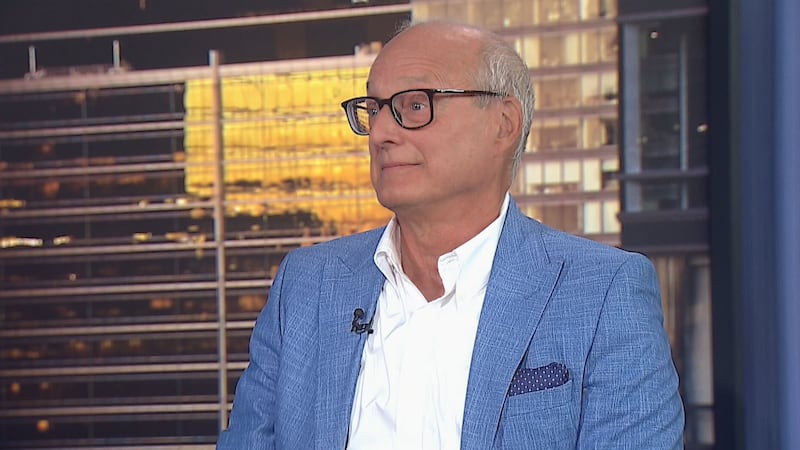
Read the full transcript below:
LINDSAY: Equity markets are trying to rebound despite renewed U.S.-Iran tensions and a jump in oil prices. Investors are turning some of their attention back to the AI trade ahead of the debut of SK Hynix’s U.S.-listed shares tomorrow. We’re going to talk about that. We’ll get perspective on all of this, actually, from Jim Thorne, chief market strategist at Wellington-Altus Private Wealth, and he joins us in studio. Great to have you in.
JIM: Thanks for having me. Good morning.
LINDSAY: Let’s start with an overall kind of view of the markets and what we’re seeing today. They appear to be resilient despite what we’ve been seeing over the last couple of days in the Middle East, and you say just ignore the noise.
JIM: Ignore the noise, but I think there’s a pivot going on, and the reason why I say that, Lindsay, is the equity markets... it’s not about earnings, it’s about earnings revisions, and it’s actually about what’s called the second derivative of earnings revisions. It’s like the surprise to the upside. Are earnings growing? We’ve gone through the first half of the year where basically the market has been driven by the AI, what I call the AI bottleneck trade, and we saw with Samsung’s numbers last week where, you know, they came up with great numbers, but the earnings revisions and the earnings growth weren’t strong enough to support it. So, I think what’s going to happen is you’re going to start to see a rotation away from the AI bottleneck trade into other areas. Earnings are going to grow at about 25 per cent year over year, and there are a lot of areas within the S&P that need to catch up.
LINDSAY: What kind of areas are you talking about?
JIM: The cyclical trade. I would suggest that you’ve got areas in the United States that, you know, it’s the real economy trade. It’s Trump deregulating, right? They want to grow the economy hot to grow out of the debt, so anything that’s interest-rate sensitive. Lindsay, I’m controversial. The next move for the Fed is going to be down, not up, as far as I’m concerned. When you look at the breakevens, and when that happens, you’ve got to look at homebuilders, you have to look at regional banks, you have to look at anything within the U.S. economy that looks beneficial to lower interest rates. And, you know, you’ve got to look out 14 to 18 months. You’re not investing for today; you’re investing for 2027, and in 2027 we see lower rates.
LINDSAY: What did you make of what we heard yesterday when it comes to the Fed’s minutes? The general consensus was, like, we’re just going to do nothing for now, like leave rates as is for now.
JIM: Yeah, well, you have a new chairman who’s not a Keynesian, right? And he recognizes the fact that... and he recognizes the fact that there’s going to be productivity growth. He is a big AI and crypto fan, and he understands that Trump is basically doing what’s called supply-side economics, or deregulating and shifting the supply curve out, which means you can run the economy hot, and it’s not inflationary. So, we’ve got a generational psychological change that’s happening within the Fed. So, right now, I add that to the noise. Let’s get through it. Let’s start to see the data come out and recognize the fact that the chairman, at least, understands that lower rates are what we need.
LINDSAY: Last time you were in, we were talking about the S&P 500 and some of your targets for the S&P 500. I’m not sure whether it was 8,000 was the target for 2026. Even since you were in last, things have changed quite a bit. Do you feel that that’s still the target? Do you think that’s a little low?
JIM: My stretch target for this year is 8,400 for the S&P 500. So I have 8,000 to 8,400, and I think next year we’re going to get 10,000. The reason why is, although I’m cautioning people to sit there and look at the second-order derivative of earnings growth in the AI trade, earnings growth is going to be substantial and stronger. We could have US$600 to US$650 in S&P earnings in ’28. You put a 22 to a 25 multiple on it. You choose the multiple you want to pay for earnings, and we can go substantially higher from here.
LINDSAY: Another big story we’re watching today: SK Hynix debuting tomorrow on the Nasdaq. Is that something that you’re watching? Is it on your radar, this debut?
JIM: Well, it’s memory, right? And the economy is short compute and short memory. Memory is intelligence. It’s a wonderful company. It’s in the sweet spot, but earnings growth has ramped up substantially, and they need to basically digest. So, would I be interested in positioning? I love memory, right? But if I look at the charts, the charts say they need to rest and chop for a period of time. I would much prefer that. Okay, so I use the 200-day exponential moving average as fair value for stocks, and when it’s positively sloped, you want to buy. Okay, so Nvidia and Broadcom are right there at the 200-day exponential moving average. Wonderful companies, sweet spot of AI, cheap. I would buy those. Micron and SK Hynix are substantially above. They need to work. And then you were talking about gold earlier. When the slope of the 200-day exponential moving average shifts to negative, you’re in a long-term intermediate bear market. That’s where Agnico Eagle and the gold shares have turned into a bear market that nobody’s talking about.
LINDSAY: I do want to go back to SK Hynix, though, and just ask you, like, what does that do? This company has been trading, obviously, in Asia for years, but what does that do to a company when it starts trading in the American markets, right? Like, opening up to a whole new slew of investors who can trade with American dollars.
JIM: It is, and you have arguably the largest market in the world, and now it competes with Micron. You can have... do you want to have SK and Micron? Or if you were a U.S.-based investor, you could only buy Micron. So now you have a discussion in terms of your asset allocation. Which one do you want? So it’s more choice for investors, and that’s good.
LINDSAY: And more competition for these companies, right? Okay. And then I want to move on and ask you about Meta as well. Obviously, as we said in the headlines there, it’s announced it’s building a $13-billion data centre in Alberta. Is this a good AI buildout story for Canada, do you think?
JIM: It is, but what the bigger story is, is that the industrial policy of Canada is slowly moving from Quebec and Ontario out to Alberta. Alberta is the future for our country, and it has been suppressed for too long. So with the pipelines and with Meta, you’re going to see the economic engine, or a portion of the economic engine, rightly move west.
LINDSAY: Because we’ve had, obviously, with those pipelines, there’s been that question of, like, okay, is there going to be private capital here? Is there a private proponent? There’s one for the one pipeline, but that has been a big question. If Meta is investing in Alberta, does that show investors that this is potentially an okay place to be in terms of safety, less risk?
JIM: There’s a lot of capital that wants to come to this country and invest.
LINDSAY: Alberta specifically.
JIM: Specifically. So, I’m not worried about that. I think Prime Minister Mark Carney was over in the Middle East, and, you know, there are people in the Middle East that want to invest substantially within Canada. So, I’m not worried about the capital, and he’s right. This is a place that people want to invest. Let’s just create the environment for foreign capital to come, and it’s starting, which is a good story. It’s just going to take a couple of years.
LINDSAY: And I know I’ve talked to you about this before, but this whole question about separation in Alberta later this year — we’re going to see that on the ballot for that province — does that do anything in terms of maybe scaring away potential investors?
JIM: No, because I think there are going to be the true believers who are going to want to separate no matter what, and I think the independents will see that, you know, Canada is starting to work for Alberta. So, it’s a forcing function, to be sure, but I don’t see Alberta separating, and I don’t think it’s a serious threat right now.
LINDSAY: Okay, there’s another story that I wanted to ask you about. Not really a story, but Bitcoin has been doing some interesting things lately. You were flagging that to me off-air beforehand. What are you noticing right now with the cryptocurrency?
JIM: Well, first, everybody hates it, and everybody says it’s dead. At 60,000, 10 years ago, we would be having this conversation at 3,000. The Clarity Act is about to get passed in the United States, which is one of the most substantial regulatory changes, and I think people really need to understand that we are moving our global financial system onto the blockchain. Okay, whether or not Senator Warren wants it. And the core of that blockchain technology is Bitcoin. So, the statement I would say to you: if you do not see Bitcoin as an opportunity at 60 to 63, don’t buy it at 300,000 when the chart’s vertical, right? Don’t do what people did with gold in the first part of this year, buying these parabolic moves. We are into this new era. We’re going to embrace blockchain, we’re going to embrace tokenization. It’s going to happen, and Bitcoin is going to be at the centre of it. And that’s why people need to buy low, sell high, and recognize the opportunity in Bitcoin, and don’t fear it.
LINDSAY: Don’t fear it, because I was going to ask, like, is it still as risky as... it’s an infant asset.
JIM: But you’re now changing. It’s about to go mainstream. So if it’s about to go mainstream and you can’t get into it now, and you haven’t done your work, please do your work. But I’m saying right now, gee whiz, I mean everybody wants to buy Micron and SK Hynix when their charts are up to the moon, but here’s one where you’ve got a massive generational structural legislative change happening, a massive tailwind, and nobody wants to talk about it.
LINDSAY: Okay, we’ll leave it there because we are out of time. Jim Thorne, chief market strategist at Wellington-Altus Private Wealth, thanks so much for joining us, as always. Appreciate it.
---
This BNN Bloomberg summary and transcript of the July 9, 2026 interview with Jim Thorne are published with the assistance of AI. Original research, interview questions and added context was created by BNN Bloomberg journalists. An editor also reviewed this material before it was published to ensure its accuracy and adherence with BNN Bloomberg editorial policies and standards.

