Strong corporate results and wider participation across U.S. equities had supported confidence before the escalating Iran conflict introduced new uncertainty. The shift is forcing a reassessment of geopolitical and portfolio risks.
BNN Bloomberg spoke with Carol Schleif, chief market strategist at BMO Private Wealth, about the durability of the bull case and the forces shaping asset prices.
Key Takeaways
- Elevated expectations mean companies must deliver substantial earnings beats to receive a positive response from shareholders.
- Heavy AI infrastructure spending is reshaping balance sheets and putting pressure on free cash flow.
- The U.S. Fed is expected to remain on hold while it assesses inflation from oil prices, tariffs and supply disruptions.
- Smaller companies and more sectors are participating in the rally, reducing its reliance on a handful of large technology stocks.
- Infrastructure investment and dealmaking remain supportive, but businesses and consumers face growing pressure from repeated economic shocks.
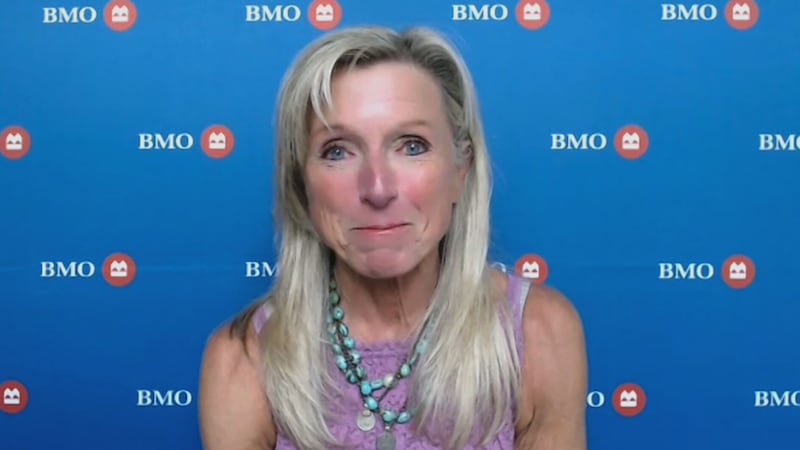
Read the full transcript below:
LINDSAY: The AI boom continues to power earnings, but escalation in the Middle East has dragged down markets and is testing the bull case now. So, what does it mean for your money? Joining us to unpack this is Carol Schleif, chief market strategist at BMO Private Wealth. It’s great to have you join us. Good morning.
CAROL: Good morning. Happy Friday.
LINDSAY: You too. So, after solid Q1 earnings, it seems as though expectations just keep getting higher and higher. I wonder: So far, from what you’ve seen in this latest quarter, has the market delivered?
CAROL: Yeah, the companies that have reported so far largely have delivered. The pre-report we have—obviously, they get taken to the woodshed if there’s any sort of expect—or alteration, if you will, from expectation. But, yeah, definitely, we had super-strong bank earnings last week. We had some other companies that have started to report.
I know there was a lot of angst over the Google report yesterday, but when you looked at the backlog on cloud—on cloud—that AI theme, the theme of Industrial Revolution 4.0, and that we’re rebooting things for a very long term, a different sort of infrastructure build, if you will, is still very much intact. But those high expectations also set it up, so it makes it tough for investors because companies really have to beat by a lot in order to best those expectations.
LINDSAY: So, do you feel like maybe the market reaction to Alphabet, for example, or even Tesla was overdone in the last couple of days in terms of people’s, like, high expectations and what was coming in?
CAROL: Yeah, I think it’s—it’ll—time will tell whether they’re overdone or not. But I think that the key thing, zooming out a bit, is to realize that we did come into this quarter with substantially higher expectations than we had last quarter because, last quarter, we saw, I think, the aggregate earnings expectations on the S&P, for example, were 13 or 14 per cent, and we generated 28 per cent.
So, this quarter, we’re coming into it and, in aggregate, people are expecting something like 20 per cent earnings growth or better across a broad variety—not just AI stocks, but across the markets. So that sets the bar very high, and it’s higher. It’s harder. We need a pole vault to get over some of these expectations versus last quarter. We just had to step over them.
LINDSAY: Because, as you say, like, AI is transforming just how these companies spend and finance themselves. How should investors make sense of all that as we see these earnings start to roll out?
CAROL: I think it’s important to remember that we’re going through a transition period, and investors clued in—have clued in recently, especially—that one industry or subsector’s excess margin, or excess margin and excess earnings, comes out of somebody else’s cost structure. So they’re trying to parse that. They’re also trying to parse the fact that there are big expectations for what the build is, but actually getting it started is taking some time.
And also, you’ve got companies pre-accumulated things like chips and servers and things like that because they can’t get the data centre open yet, but they’re putting them in a warehouse to make sure that they have them when they can get the warehouse—the data centre—open and turned on.
So there’s a lot going on, a lot of moving parts, and investors are also having to figure out these aren’t asset-light companies anymore. They’re having to figure out: How do we look at the income statement? How do we look at the balance sheet? And how do we think long term? Because the trend itself is not going away, but there’s a lot of muddiness and rolling around while we try to figure out, you know, how do we get there? We’re not going to get there smoothly.
LINDSAY: In a broader sense, too, like, the Fed says price stability comes first. So, what does that mean for markets as we see oil cross $100? Obviously, it’s falling a little bit today, but this escalation in the Middle East and what that’s doing for oil and energy moving forward.
CAROL: Yeah, and that’s the challenge. The key thing is that what you prefaced it with is the Fed has come out in no uncertain terms under new Chair Warsh and said that they understand they have a dual responsibility—their congressionally mandated dual responsibility—but their number one focus right now is returning price stability, which means that inflation focus.
Then the second part of the question is, with energy, the Fed and the Fed governors will have to decide: Do they look through the energy spike-up like markets have, as in viewing it as temporary, that it’ll pass through the system like the original tariffs are? And we’ve also got additional tariffs, obviously, in the mix too.
So the Fed has its work cut out for it. But then again, markets have—real yields have moved up. So partly, there’s an argument growing that maybe part of the Fed’s work is done for it in the short run. And you’ve also got the establishment of those five task forces, which mean that there’s some time in here.
Our suspicion, our house view in wealth, is that the Fed stays on hold despite the fact that you’ve got increased costs coming in. In the long run, that—depending on data, seeing how it filters through—but the Fed has some time, at least in the next meeting or two, to be able to sit patient and see how that stuff washes out.
LINDSAY: And we are at a point in the Iran war that we haven’t seen, really, in the past five months, especially with—we’ve now got more coming into it, right? The Houthis are entering the conflict. How does that change your market outlook moving forward?
CAROL: I think the interesting thing is we—we’ve talked repeatedly over the last couple of years about how resilient consumers are, how resilient businesses are. But we were starting to get the sense, before we saw the ceasefire, when energy prices came down—we were starting to get the sense from a lot of quarters that that resilience was there, but they’re getting exhausted.
It’s like someone running a marathon, and maybe we’re at mile 20 or 22. And so there was—you were starting to push the fringes of that exhaustion. And so having another round of tariffs, another round of high energy prices and, as you alluded to, the complications of supply chains—because if you’re a shipper and you’re trying to get anything through, and you were using the Red Sea, now you’ve got to rethink the Red Sea—and so there’s just—it’s one more thing to test that exhaustion and endurance of both customers and businesses.
We think, in the long run, we get there. But in the short run, there’s a lot for markets and business leaders to deal with.
LINDSAY: I was just looking through your notes, and I want to talk more broadly about the markets now because you say in your notes that market broadening has been healthy, and you are seeing some trends when it comes to some of the smaller caps, like the Russell 2000. What are you seeing there?
CAROL: Well, we’re definitely seeing it because, actually—and I haven’t updated my numbers because I’ve been travelling—but as of late last week, you still had the Russell 2500, which is a small- and mid-cap indicator, up to 20 per cent year to date, and the larger cap-weighted indexes, like the S&P, were only up 10.
And so you’ve seen that go through, and you’ve seen it in the earnings expectations too—not only the expectations, but where the beats were. There were a substantial number of industries beating in—in last quarter. Expectations are high for a broad variety of other industries, AI or not AI, to do well this—this quarter.
And you’ve got other trends going on. It’s not just the AI buildout; it’s also roads, bridges, ports—lots of different things going on in infrastructure. And we’ve underinvested, not just in the U.S. but globally. We’ve underinvested in infrastructure for decades, and the fact that we’re now trying to, all of a sudden, retrofit an entire economy for a new knowledge age where there’s increased and increased demand—because that’s the thing.
While the data centres may not be up, the demand for them is still up substantially, and that pull is not going to stop. We’re not going to stop experimenting with AI, figuring out how to deploy it and moving into—we can’t competitively. Companies can’t.
So, so that benefits a lot of other providers in there. And the other thing that benefits them is that you’ve had a substantial uptick in M&A and capital expenditures. So you can make or you can buy. There’s a lot of activity going on.
M&A is running at record levels, which is benefiting other things, and it also gets—puts energy into the markets, if you will, because if you get one acquisition over here, everybody else puts the list together of all the other companies that might be in the mood for either being bought or sold.
LINDSAY: OK, we’ll leave it there for now. Carol Schleif, chief market strategist at BMO Private Wealth. Really appreciate your time. Thanks for joining us.
---
This BNN Bloomberg summary and transcript of the July 24, 2026 interview with Carol Schleif are published with the assistance of AI. Original research, interview questions and added context was created by BNN Bloomberg journalists. An editor also reviewed this material before it was published to ensure its accuracy and adherence with BNN Bloomberg editorial policies and standards.

