Sharp swings in oil prices have put Canada’s energy sector in focus. Portfolio manager Jerome Hass sees opportunities in the infrastructure supporting oil and gas activity.
BNN Bloomberg spoke with Hass, portfolio manager at Lightwater Partners, about his preference for Rockpoint Gas Storage and Gibson Energy.
Key Takeaways
- Hass says strong third-quarter results are allowing energy companies to generate free cash flow, repurchase shares and reduce debt.
- He favours infrastructure businesses for their limited direct exposure to oil and natural gas prices.
- Natural gas storage operators can benefit from price volatility by buying gas when prices turn negative.
- Hass sees Rockpoint’s earnings before interest, taxes, depreciation and amortization growing six to seven per cent annually, alongside a dividend yield of about 5.3 per cent.
- Gibson’s terminals handle one in four Western Canadian oil barrels, with Hass highlighting its export exposure and dividend yield of about 5.3 per cent.
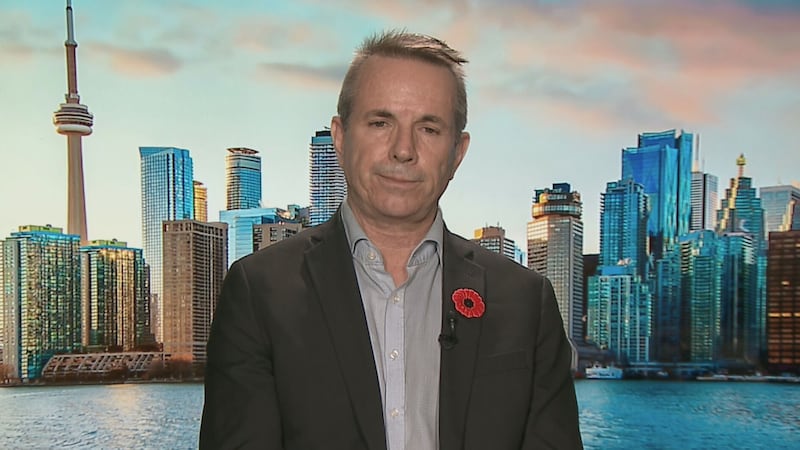
Read the full transcript below:
ROGER: Oil prices continue to face volatility as investors weigh global supply, demand and geopolitical developments. Joining us now to discuss more about the outlook for the Canadian energy sector is Jerome Hass, portfolio manager at Lightwater Partners. Jerome, thanks, as always, for joining us.
JEROME: Thanks for having me, Roger.
ROGER: OK, it is a maelstrom out there right now, but energy is actually up, at least on the TSX. How is it looking right now?
JEROME: Well, it seems to be very uncorrelated with the rest of the equity markets. Everyone was partying like it was 1999 yesterday, and oil was down eight, nine per cent for reasons that we’re still scratching our heads over. And today, you know, there seems to be a bit of a rebound on that. And, you know, again, it comes down to a lot of sentiment on the market.
ROGER: And what is — and what is that sentiment right now? We had that, that drop yesterday, but with no real reason. So what’s driving everything then?
JEROME: Well, I mean, I think a lot of people thought, firstly, the tourist trade was, as we referred to it, the fast money in the oil sector clearly exited yesterday, as TACO occurred once again with Trump, which is “Trump always chickens out.” And so the threat of bombing Iran after Tuesday’s election obviously didn’t materialize yesterday, and so we saw the fast money moving out of that. But when you look at the fundamentals, the Democrats aren’t going to do anything to stop the war in Russia and Ukraine. In fact, the Trump administration has been openly hostile toward Ukraine for the last two years. And so, by having a Democratic House and Senate, arguably that, that’s going to give more support to the Ukrainians, which will prolong the war there, which will support the higher-for-longer thesis on oil. And with regard to the Iran war, I don’t see what the Democrats could do to solve the problem, but more importantly, they don’t really have a strong incentive to solve the problem for Trump. Trump lost the election on Tuesday because of the Iran war, and, you know, there’s a saying: “When your enemies are making a mistake, don’t stop them.” And so, why would the Democrats want to do anything to stop Trump or to help Trump ameliorate the situation in, in Iran?
ROGER: All right. Let’s talk a little closer to home. And TC Energy raised its full-year outlook after another strong quarter. Does that give you optimism about the energy sector?
JEROME: Absolutely. Like, all the oil-related names who are reporting Q3 numbers are having kick-ass quarters. Like, just phenomenal results are coming out. These companies are kicking out free cash flow. They’re buying back their shares. They’re paying down debt, and these are, these are the types of names that people should be looking at in, in this type of an economic environment. TC Energy is just one example of that. We have two other names that we’ll talk about later on that are energy-related infrastructure plays, which we actually prefer over TC Energy because they’ve got better growth prospects, lower valuations and a better yield. But, you know, you’re not going to go too wrong owning TC Energy or any of the pipelines, for that matter.
ROGER: So infrastructure is the way to go right now.
JEROME: Well, it has a lot less volatility. I mean, the two names that we’re going to talk about have zero exposure to the gas price or to the oil price, which, you know, given the volatility we’ve seen in the last three days, may be comforting to some investors out there.
ROGER: All right, let’s talk about them. First up, Rockpoint.
JEROME: Yeah, Rockpoint is a natural gas storage company based in Alberta and in California. They are the largest independent gas storage company in North America. We like the fact that it’s super cheap in terms of valuation. It trades at about nine times versus the infrastructure at around 11.5 times. It’s got about a 5.3 per cent yield in the stock, and we think it can grow its EBITDA six to seven per cent per year. They came out with some very good results this week. The Q3 results, which beat the market — the stock popped on the news — and we just think that these are the types of plays that people who want exposure to the growth of natural gas in Canada should invest in because they don’t have exposure to AECO pricing. In fact, they’re a beneficiary of the volatility that we’re seeing in the market because they’re a logical buyer when prices go negative, for example.
ROGER: All right. And the other one you have an eye on, Gibson Energy.
JEROME: Yeah, Gibson Energy, again, is an infrastructure play. This time, exclusively focused on crude oil. Again, it trades at a very healthy yield, and this is about 5.3 per cent. What we like about it is they touch — one in four barrels of oil in Western Canada go through their terminals. So they have terminals. They have, they have blending facilities. They have export capacity, and they also have — sorry, I was going to say the largest port in the U.S. — the second-largest port in Corpus Christi. So, as we’re seeing more emphasis on exporting, Gibson is a clear beneficiary of that out of the U.S., but we just like the fact that it has no exposure to WTI pricing, other than the general levels of economic activity in Western Canada. And as we see, you know, the higher-for-longer thesis playing out, companies in the infrastructure will clearly benefit from that, yet not have the volatility that you see in some of the E&P names.
ROGER: OK, Jerome, we’ll wrap it up there. But thank you, as always, for joining us.
JEROME: Thanks for having me.
ROGER: Jerome Hass, portfolio manager at Lightwater Partners.
---
This BNN Bloomberg summary and transcript of the Nov. 5, 2026 interview with Jerome Hass are published with the assistance of AI. Original research, interview questions and added context was created by BNN Bloomberg journalists. An editor also reviewed this material before it was published to ensure its accuracy and adherence with BNN Bloomberg editorial policies and standards.