Canadian corporate results are in focus as stocks attempt to recover from a sharp technology-led selloff. The latest reports are prompting fresh assessments of business performance and share valuations.
BNN Bloomberg spoke with Paul Harris, portfolio manager at Harris Douglas Asset Management, about the earnings season and his views on several Canadian stocks.
Key Takeaways
- Harris expects more stock volatility but says strong earnings and lower interest rates provide support as the pace of AI data centre construction faces uncertainty.
- Cineplex’s reliance on blockbuster films leaves it vulnerable to an uneven release schedule and continued competition from streaming, he says.
- Harris sees potential in Telus as its new leadership pursues cost cuts, revenue growth and a review of non-core assets.
- Natural gas and power infrastructure demand, including from data centres, underpin Harris’s positive view of Enbridge.
- Volatility can create opportunities for Brookfield Asset Management to finance businesses and acquire assets at lower prices, Harris says.
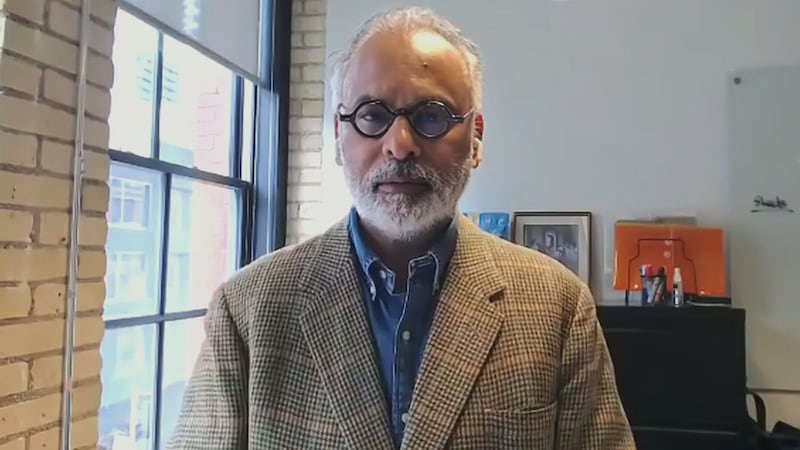
Read the full transcript below:
LINDSAY: The Nasdaq is attempting that rebound after Thursday’s sharp selloff, led by weakness in chip stocks, and there’s a new batch of Canadian earnings in the mix as well. So let’s bring in Paul Harris, portfolio manager at Harris Douglas Asset Management, to break down some of this. It’s great to have you join us once again. Thank you.
PAUL: My pleasure. Thank you for inviting me.
LINDSAY: Let’s start with the markets because I wonder what’s driving the market anxiety, I guess, that we’ve been seeing throughout this week and the rebound we’re seeing today.
PAUL: Yeah, well, I mean, I was kind of confused by what happened on Wednesday after the kind of Democrats won. I mean, I don’t, I don’t think there — I think there are so many of the issues that the markets face still out there. Whether it’s Iran, whether it’s maybe Ukraine, whether it’s higher oil prices, whether it’s interest rates going up — or, you know, they’ve come down lately because of what’s happening in the stock market. But I think those issues are still out there, and I think that they’re, they are very, you know — and all this issue with AI being, the AI trade being such a big part of what’s happened with the stock market.
So I think these are very big issues, and I think that it’s hard to kind of understand what’s going to happen with a new Congress starting in January. And so the market’s kind of running up like that and coming back, coming down yesterday, I think kind of evens out stuff. And I think the market really has to find a footing about how they deal, how we are going to deal with many of these issues going forward.
LINDSAY: Yeah, and I wonder where it goes from here, right? Like, do you think investors should brace for more downside before markets maybe eventually find a floor?
PAUL: Well, I think certainly there, you know, I think there’s certainly more potential for that, or more volatility, I would say, right? But I think that going into the end of November, and — but usually you get a rally in December from a seasonal point of view. So I think that there’s a, there’s a chance that you may see more volatility.
I think you saw the VIX sort of run up so high yesterday, which is almost like a point where, you know, it gets to where you think about buying the market, right? So I think that there’s a — you can expect more volatility. I think the, you know, there are many things, like if you look at earnings, they were quite good over the, over the quarter, right? So I think there is some, there’s some foundation there that helps the stock market.
I think the issue becomes how we think about, you know, what happens with AI data centres, all these things. You know, I don’t think they stop, but I think there may be a, you know, a cooling down of how quickly they’re going to get to be able to build these things out, right? So, so I think there’s, there are, there are many kind of issues that the market faces, but I think that the underlying issue of, you know, good earnings has shown up again in this quarter. I think that, I think that you’ll continue to see that going forward, and I think the rates are lower, right? So it helps a little bit.
LINDSAY: You talked about earnings, so I want to get to that because we’re not done with earnings season yet. We have a whole slew coming out today, of course, as you know. I want to ask you about some of them. Cineplex is what we’ll start with. It reported record quarterly revenue. I wonder what you make of that. Like, is this a turnaround story that’s gaining momentum?
PAUL: You know, it’s hard. I mean, I don’t like Cineplex at all because I think it’s a — like, if you look at the numbers, yes, they were very good, but they came because there were two big, really big hits, right? So they’re kind of stuck in the situation where, if you have these really big, big blockbusters, then they do very well, especially on the premium side.
You can see that concessions were down a little bit, but I think that, you know, I think that the issue of streaming will continue to dominate this kind of, that industry. And I think that they’re going to continue to have trouble, you know, over the long term, that people are just more and more willing to watch a movie at home, and it’s much easier and more enjoyable in some ways, right?
I think these big blockbusters make a difference. You can’t — I mean, The Odyssey would have been much better to see in a cinema than probably in your home theatre, but I think that’s not, that’s not — those are just a few films each year, right? So they’re very dependent on these blockbusters, and if you don’t have one in a year, I think it’s much more difficult.
LINDSAY: Yeah, a very good point. OK, Telus, in the meantime, missed expectations. What went wrong in this quarter for Telus?
PAUL: Well, you know, I think it’s funny when we listen to analysts talk about Telus because, to me, Telus is a, is a real story that’s going to change over a period of time. It’s a company we own. You know, they have a new CEO. He’s sort of going through and thinking about how to make the company better, whether from a financial footing, which is one of the things because they’re looking at cost cuts, but also, you know, trying to drive new revenue, maybe even get rid of some of the assets that they don’t really want to keep on their books — Telus non-core assets, non-telecom assets.
So I think you have to give them a chance to kind of review the whole company and then, from there, kind of make a decision about, you know, what Telus is going to look like over the next several years. I think it’s probably a stock you want to buy, even though it’s, you know, it’s at these levels, because I think that, you know, they’ve cut their dividend. They’re going to move on from that. I think they’re going to have better financial stability if they can get all those cost cuts in, and they can really kind of review their businesses and pick the best businesses that are growing the best for them.
LINDSAY: Enbridge also reported a rise in profit, and they’re attributing that to strength in the natural gas business. What’s your thesis on this stock? Do you like …
PAUL: Well, so we own Enbridge. We’ve owned it for a long time. We really like it. I mean, I think the natural gas side did well. I think the power infrastructure is doing well. You know, I think that Enbridge is kind of in a little bit of a, in my view, a bit of a sweet spot with what’s going on with their ability to help on the data centre side.
You know, natural gas is a, is a very, is a much cheaper and better product to use than other areas of, in — if you’re looking at energy. And I think the pipeline guys have done really well. So, you know, being able to supply all these things. So it’s Enbridge. I think at these levels, you can, you should be buying here.
LINDSAY: OK, and then lastly, I wanted to ask you also about Brookfield Asset Management. Brookfield Asset Management met expectations, but — so I wonder, like, do you see the current environment creating more opportunities for the firm or, or really just more challenges going forward?
PAUL: Well, I think, like, this is the, this is the core — like, this is a great environment for Brookfield, right? I mean, first of all, when you look at their numbers, they raised $25 million in the quarter, $123 billion for the year, right? So their kind of fees were up. All those things were up. In my view, they were good numbers.
I think what you have to remember is where they really perform well is environments of volatility because they can buy up cheaper assets, right? So for them, I think for them, it’s always this environment when they have volatility. When certain areas are not doing well relative to other areas, they can, they can come in and provide the capital that is needed for businesses either to borrow from or to buy assets that they want, whether it’s property, whether it’s infrastructure.
So they have that ability, and they’ve been very good at this over long periods of time, right? So it’s a very unique company in this country that has been able to, you know, look at purely very much like a value investor, right? They kind of wait around. They have all this money, and they’ll deploy it when it’s the right time. I think that’s what you’re paying them for. That’s what you’re paying those fees for because they’re able to do that very successfully over long periods of time.
So I, you know, we don’t own Brookfield Asset Management. We own Brookfield Corp. But I think Brookfield Asset Management is equally a great asset to own.
LINDSAY: OK, we’ll leave it there. Paul Harris, portfolio manager at Harris Douglas Asset Management. Always great to have you join us. Thank you.
---
This BNN Bloomberg summary and transcript of the Nov. 6, 2026 interview with Paul Harris are published with the assistance of AI. Original research, interview questions and added context was created by BNN Bloomberg journalists. An editor also reviewed this material before it was published to ensure its accuracy and adherence with BNN Bloomberg editorial policies and standards.

