Historically, nobody paid any attention to the quarterly refunding announcement (QRA) except the primary dealers of U.S. treasuries.
In recent years, post-COVID, with massive annual deficits in a time of economic growth, the supply of debt and how it is being funded matters a lot to risk assets. U.S. treasury secretary, Scott Bessent, has put the market focus on the US 10-Year yield.
With the Federal Open Market Committee stopping the balance sheet run-off in December, there is an opportunity for the treasury to manipulate the funding to help lower yields. Bessent, in his previous roll as a hedge fund manager, was very critical of the former Chair of the Federal Reserve Janet Yellen Treasury in this respect.
The current yield of the entire U.S. bond debt is 3.23 per cent and of the T-Bills curve (under one year) is 3.87 per cent. So it’s currently cheaper to fund the debt with bonds versus bills, but if you think rates are going to continue to fall in the new FOMC board going forward, then you roll more bills for a while.
The caveat is that inflation needs to be contained. It’s clear the US government wants to run the economy hot and the wealth effect of the stock market to be a badge of honor for the President. Inflation is the biggest risk to the uncontrollable US debt situation. It’s clear Congress has little political will to address the real issues, but the White House may too!
With the United States Congress moving over the weekend, the government looking to open up again and pat themselves on the back before Thanksgiving and the holiday season. U.S. President Trump may be looking to manipulate the Supreme Court on tariffs and voters with a $2,000 piece of tax refund candy. Spending the tariff revenue this way would be bearish for bonds and the “supposed” goal of reducing the mounting debt burden.
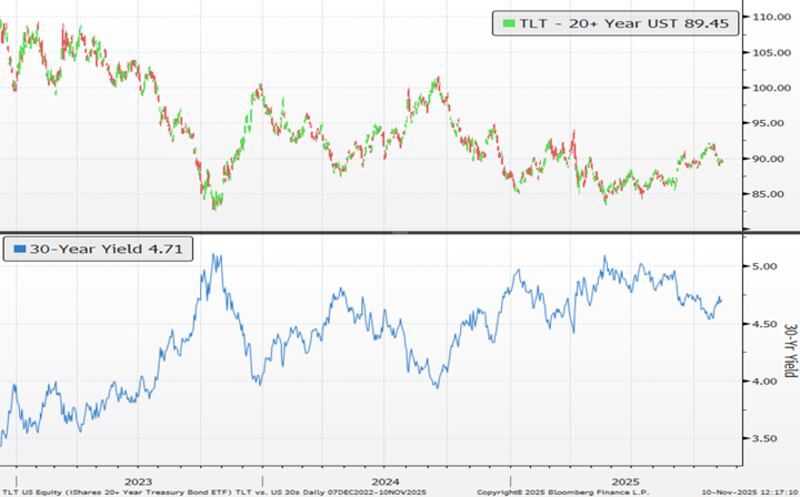
The chart below shows the TLT (US 20+ Year index) ETF along with the current 30-year yield. The trend to higher yields is clear. The cost of the debt is going up.
Governments need to cut deficits when the economy is strong. Offering up a check to consumers is just bad policy and only makes it harder the next time the economy falters. I fear the next recession will have limited policy options to bring it back as quickly as we have become used to.