Fundamental economics is all about the intersection of supply and demand.
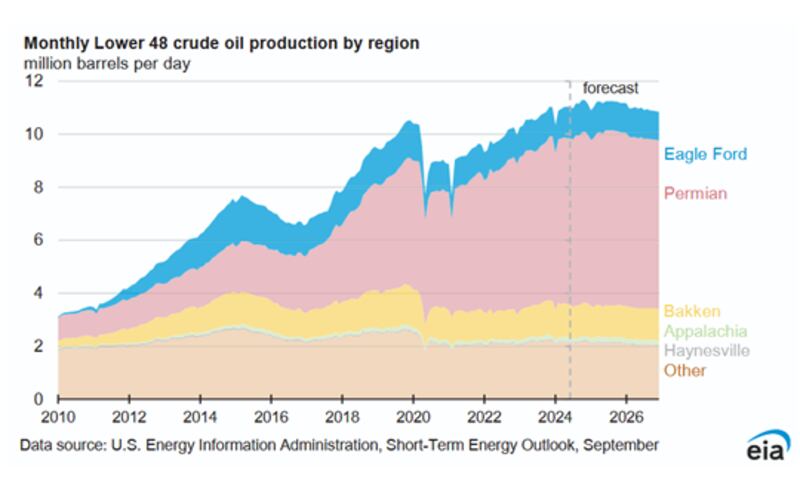
The Energy Information Agency (EIA) is forecasting the peak of U.S. Oil & Gas supply in its most recent report. In the short run, it expects supply to rise relative to demand. If it is correct, we should see a great buying opportunity in the next correction in the sector.
If the Russia-Ukraine war settles, we should see a bit more supply flowing out of OPEC plus. Longer-term, weakness in oil prices will see the U.S. restock the strategic petroleum reserve, but don’t bet on that until after the U.S. mid-term elections. The U.S. Administration wants to keep inflation low in 2026.
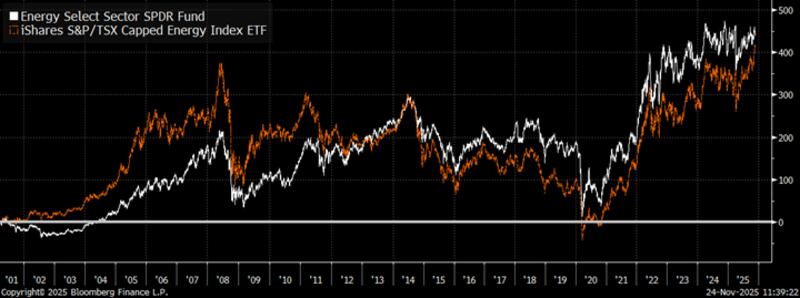
The two original sector ETFs that cover the Canadian (XEG) and U.S. (XLE) energy sectors have generated about a seven per cent annual total return in the past 25 years.
About 60 per cent of that is from the dividend, so using the Canadian ETF in a taxable account makes the most sense on a total return perspective.
Investors should understand that the revenue is highly correlated to the price of U.S. oil and gas, though there are unique risks in the Canadian oilsands revenues. But the volatility of the sector is massive and in the past decade, there has been zero capital gain to speak of.
It’s not a growth investment and must be bought into weakness and not strength. The odds of a strong bull market is very low. Having said that, the poor investment in recent years in the sector is setting up for a good investment opportunity.
If the EIA is correct, look to accumulate the ETFs or your favourite stocks into the next pocket of economic weakness.
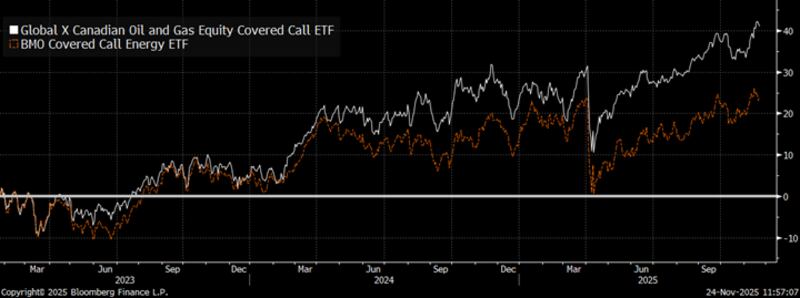
This is one of the best value plays in public markets where the headline market risk is relatively high. For the income seekers out there, have a look at ENCC (Canada focused) and ZWEN (Global Energy) as a way to maximize the income while you’re waiting for the next correction in the sector.