We have said for the past decade that bonds will likely remain a bad investment vehicle for the foreseeable future.
Since rates started to go negative in Japan and Europe in the wake of the Great Financial Crisis, public fixed-income returns have been terrible. This will not likely change.
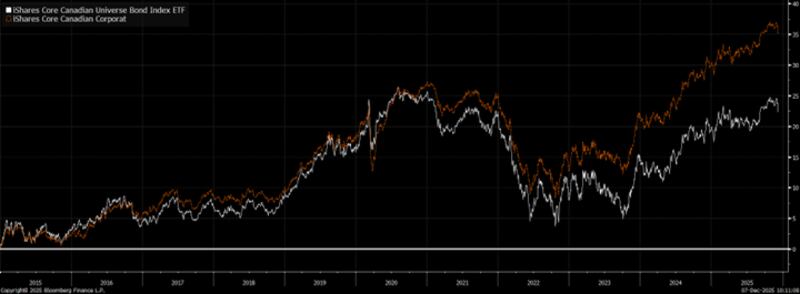
The total return of the Canadian bond market over the past decade is 1.86 per cent (XBB) and 2.79 per cent (XCB) barely keeping up with inflation.
Even some of the best active bond managers don’t have returns much higher than these low cost ETFs in the past decade.
The top performers in Canada are in the five to six per cent range. Good, but still not compared to private credit markets.
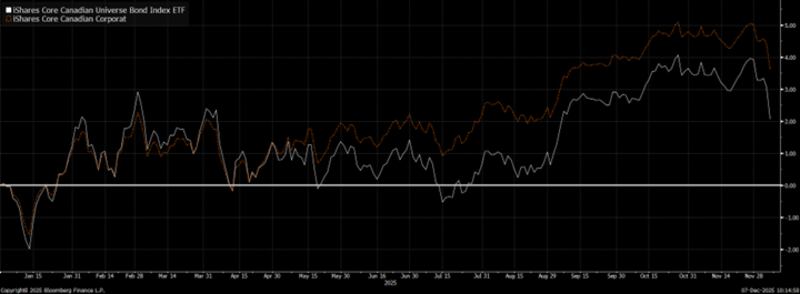
Last week, the (un)credible Canadian employment numbers shocked the market to the point where the yield curve is now pricing a rate hike over the next year. On a YTD basis, you can see the dramatic drop in these two ETFs tracking the Canadian bond markets.
The Bank of Canada is now expected to be on hold in 2026 with a rate hike the next likely move. Ridiculous from our point of view, but that’s what market based pricing is telling us ahead of the Bank of Canada (on hold) and the FOMC (25 basis point rate cut) this week.
I’m in Miami this week at the Miami Alts conference. Alternative investments that target returns that are typically less correlated with public markets. Increasingly, private and alternative market investments should be a growing part of your portfolio.
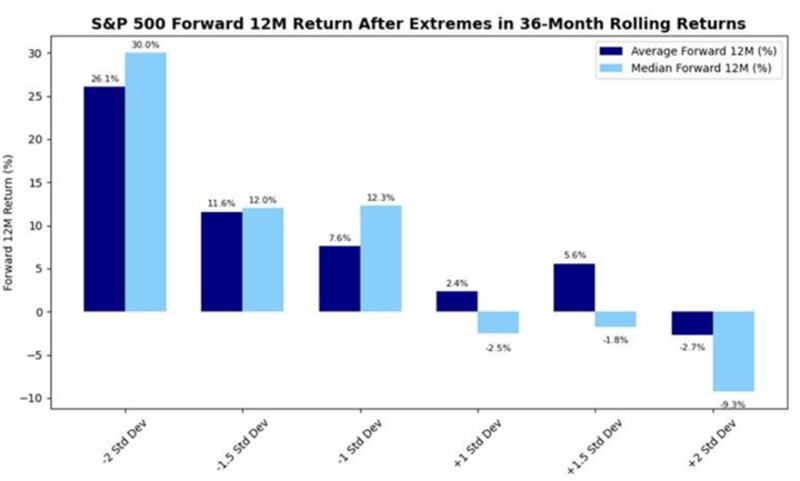
Traditional fixed-income will not be the safe part of your portfolio going forward if you hope to keep up with the rate of inflation. Public equity market valuations are extremely high. And while no one I know can tell you with any precision when the next correction will be, it could be above average given the strong market over the past three years.
I will stop short of recommending specific private investments (some advertise on BNN), and will add that this is a growing area and requires much deeper understanding that trading ETFs and stocks.
Part of the benefit of privates are the ability to earn an illiquidity premium. That means additional income for giving up the ability to sell or buy whenever you want. This is probably the most important aspect to understand. Another most difficult aspect is getting enough diversification. Like with public markets, bad things can happen. From corporate fraud to long periods of poor performance. Private market are not necessarily less risky, but they do have these other considerations to see if they are appropriate for you.
With Equity markets expensive and bond markets not likely to do the job, privates and alternatives will be an essential part of your portfolio needs going forward.

