We get an update from the Bureau of Labor Statistics (BLS) this week for U.S. employment.
Federal Reserve Chair Jerome Powell said in his press conference last week that they believe the statistical error is adding about 60,000 jobs per month. The expected report is estimating private payrolls will add 40,000 jobs for October and November combined.
That suggests a loss of 80,000 once the data gets the annual correction in the first quarter. We do not agree that job losses should be rewarded by a market advance meaning a more aggressive rate cut path.
U.S. future market, early Monday morning, are pricing little more than two more 25 bps rate cuts before the Federal Open Market Committee would be raising rates in 2027.
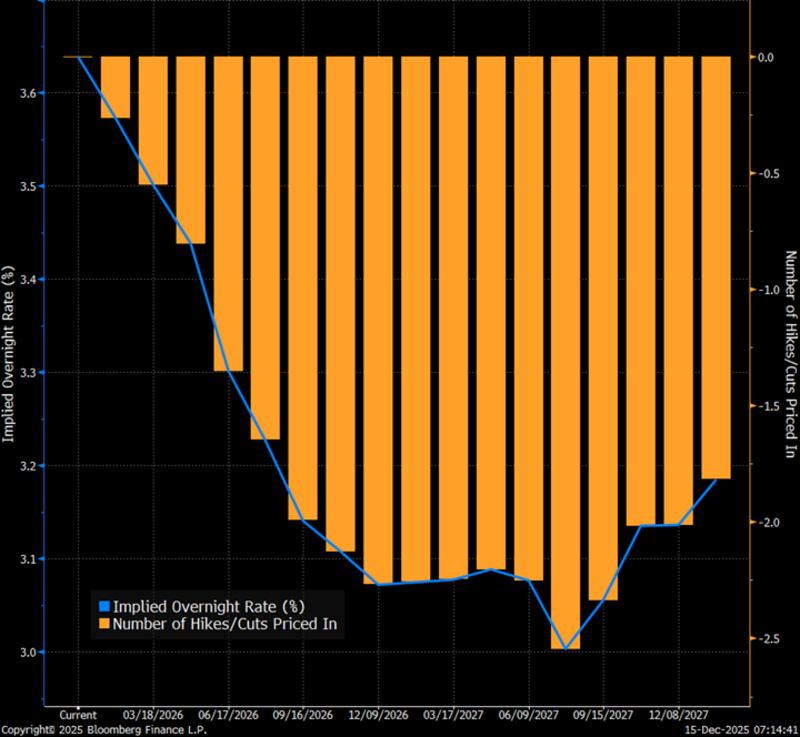
This policy path makes little to no sense to us. Policy stimulus from the “Big Beautiful Bill” should keep economic momentum into mid 2026. U.S. President Donald Trump’s Administration has a very high mandate to keep a strong equity market going into the U.S. mid-term elections.
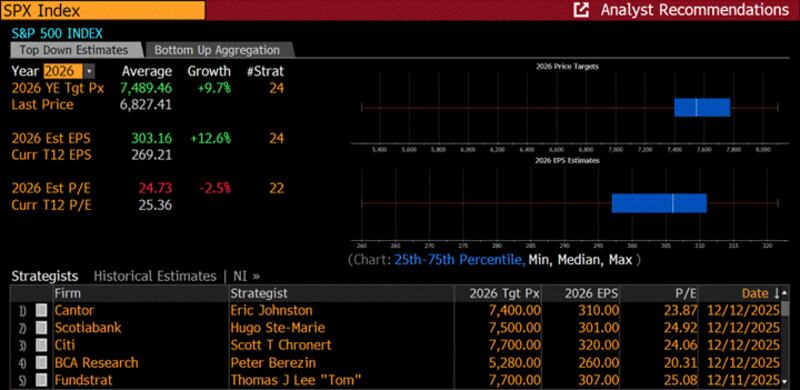
If anything, more rate cuts would be likely if the labour economy is truly weaker than the official numbers. This is not bullish for earnings. Yet the top-down market believes that earnings per share growth in 2026 is expected to be 12.6 per cent.
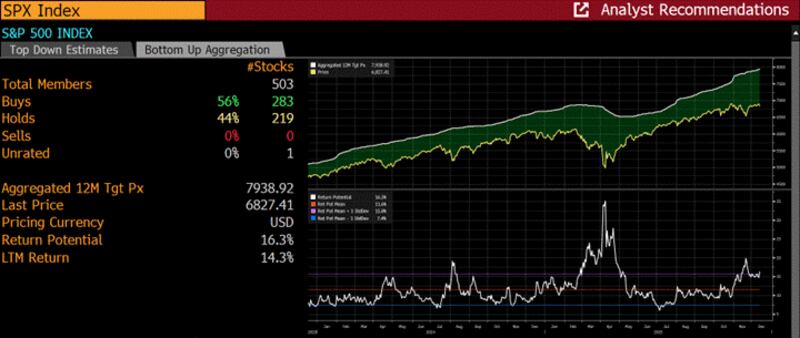
From a bottom-up perspective, analysts are very bullish with weighted composite price targets rising strongly for the next 12 months.
A few things are not lining up for us. This suggests that the risk of increased market volatility in the year is higher than average.
We continue to advocate shifting money away from public market equities to private equity and private credit markets for investors with this type of access. Timing is always difficult, but valuations are not compelling and a more defensive approach to growing your portfolio is likely required.

