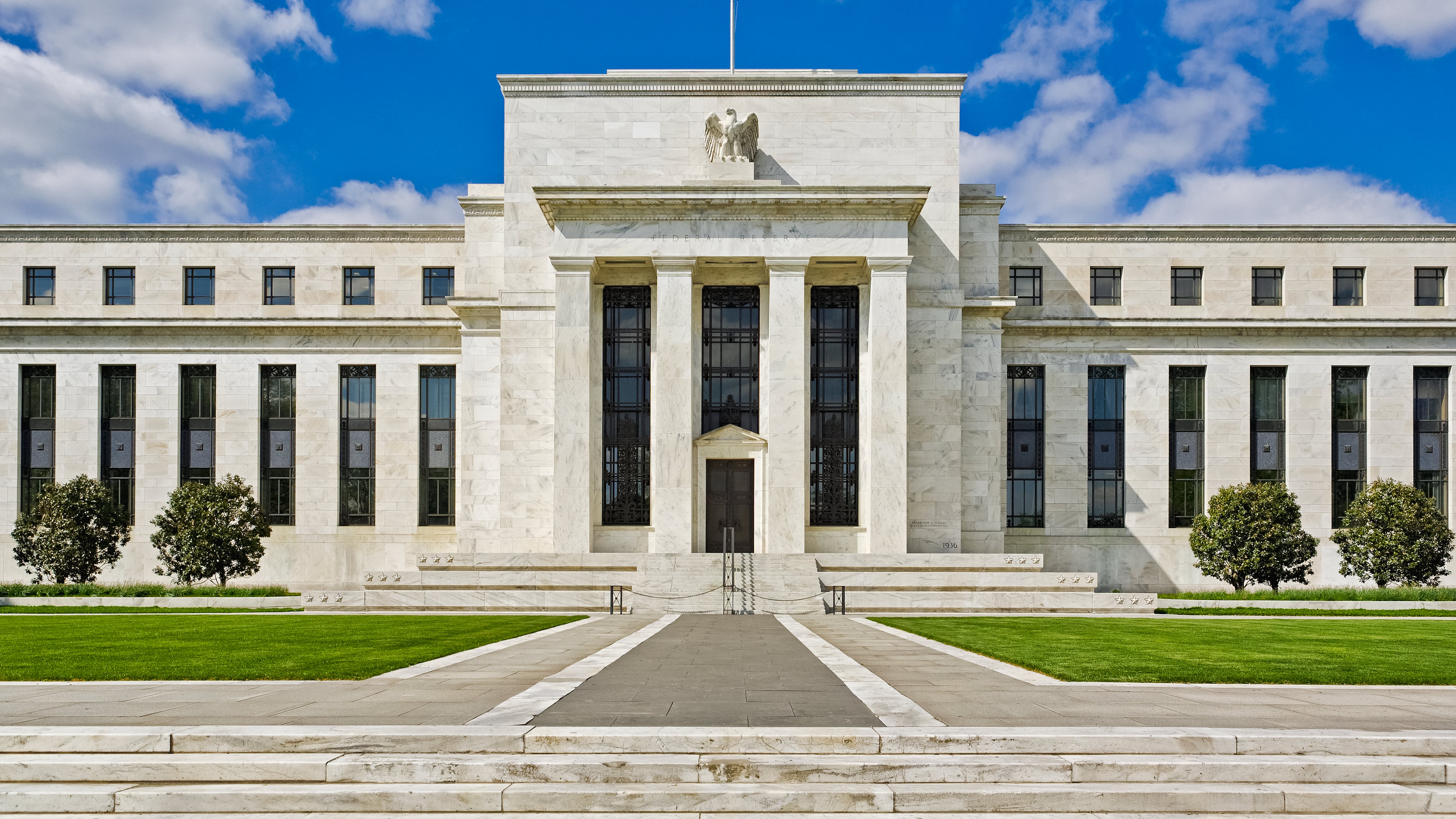
On Wednesday, Sept. 16, 2026, the U.S. Federal Reserve initiated its first policy rate hike since July 2023. There is an old Wall Street adage: “Don’t fight the Fed.” Should investors heed the adage, or is there a good entry opportunity in the stock market coming up?
The year 2026 started with investors expecting the Federal Reserve to cut its federal funds rate late in the year, not hike.
The graph below shows how expectations for a Federal Reserve hike in September started to increase in June (white line). The yellow line is the federal funds rate (upper bound).
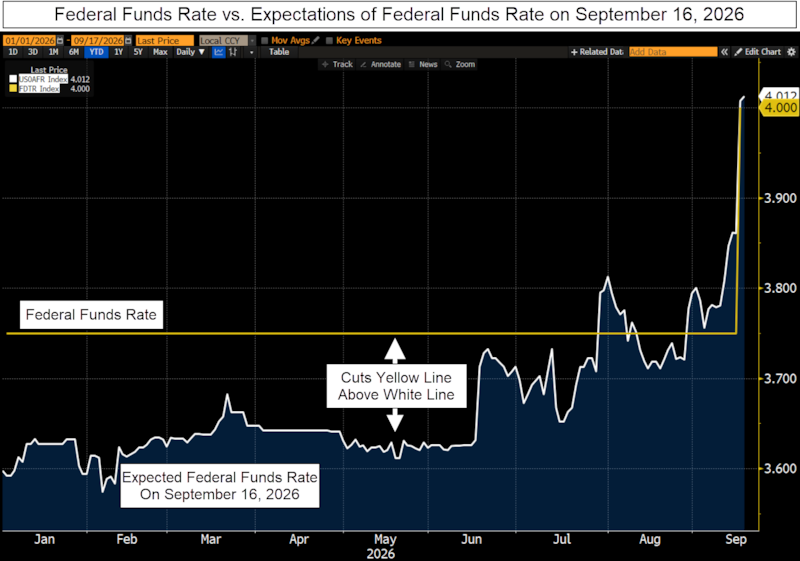
Inflation has proven to be more problematic than first anticipated at the beginning of the year. As a result, investors have been pushing long-term bond yields higher, not just in the U.S. but also Canada and many other countries around the world.
The Federal Reserve has had to switch paths and has just raised its policy rate to 4.0 per cent (upper bound) in order to fight inflation. Inflation has been rising primarily because of the supply-side shock of higher oil prices caused by the Russian-Ukraine war and the U.S.-Iran war. Food and many items have been rising in price.
In theory, higher interest rates weigh on the stock market as investors are attracted to higher-yielding bonds, and higher interest rates translate into a decline in consumer and business demand because of the higher loan costs. However, in a strong economy, investors often look past the negative effect that higher interest rates can have on the economy and push the stock market higher.
The Federal Reserve ultimately tries to balance out the positive and negative effects of a rate change. Federal Reserve Chair Kevin Warsh is purposely being opaque and not giving guidance to the market. He did not hint at more rate hikes to come in his press conference. Analysts will be pouring over the dot plot, where each Fed governor gives their prediction over time for the Federal Reserve policy rate. Warsh refuses to participate in this exercise.
Although the Federal Reserve governors voted unanimously 12-0 to raise the Federal Reserve rate, it is possible that the path forward on any rate hikes might be slow. Investors are wondering if the stock market remains an attractive investment option, given that the Federal Reserve has just hiked.
If we examine previous hiking cycles, on average the S&P 500 typically declines over the next six-to-eight weeks and then starts a sustained rally. The graph below shows the average performance of the S&P 500 starting six months before the initial federal funds rate hike and six months after. It uses the data from 1988 to 2023 and includes seven hiking cycles. The sample size is not large, but it is problematic to go back further because the Federal Reserve’s policies were dramatically different than today.
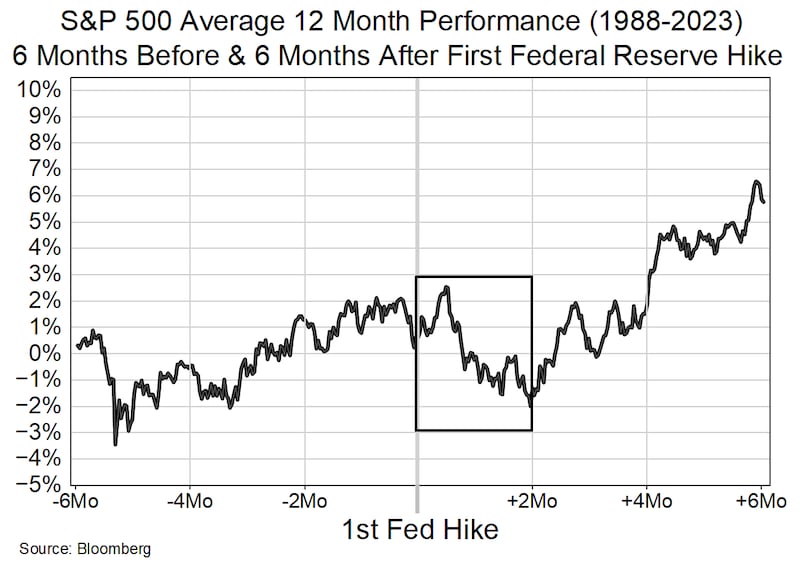
The good news is that the S&P 500, after bottoming six to eight weeks after the rate hike, on average tends to have a strong rally. Why does the S&P 500 drop in price after the rate hike and then rally shortly afterwards? The drop in price is the initial negative reaction to the rate hike, even though it was expected. The rally tends to occur because investors believe that the Federal Reserve is managing the situation and it will probably not hike too much or too fast in order to not hurt the economy.
There is a caveat. If inflation resumes its upward trend, the Federal Reserve will probably become more hawkish and decrease its runway to further hikes, which could put downward pressure on the stock market. Nevertheless, a buying opportunity could develop in the not-so-distant future if the S&P 500 follows its average previous trend around the initial federal funds rate hike.
The views and opinions expressed herein are solely those of the author(s) and may not necessarily reflect the views of Global X Investments Canada Inc. All comments, opinions and views expressed are generally based on information available as of the date of publication and should not be considered advice to purchase or sell any securities mentioned. Before making any investment decision, please consult your investment advisor or advisors.

