The price of gold has declined 25 per cent since hitting its all-time-high of US$5,417 on Jan. 28, 2026. In the background, there has been increasing buying support from central banks, institutions and retail investors.
Although the price of gold has not substantially recovered from its October low, gold is poised to move higher in the not-so-distant future.
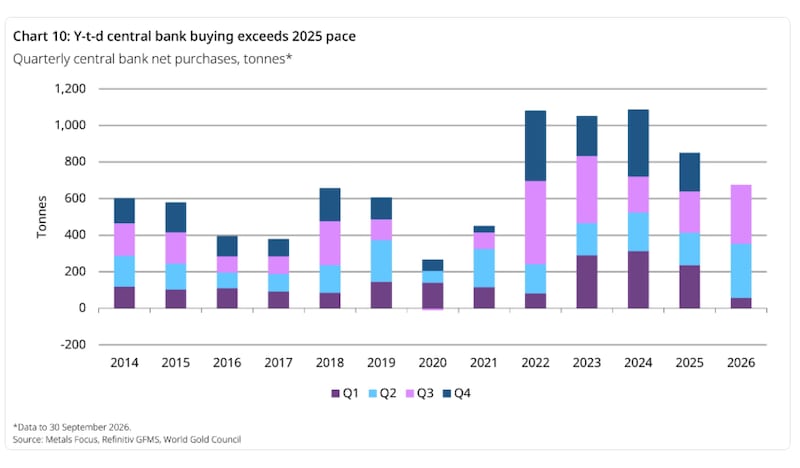
Central banks have been net purchasers of gold since 2010 and have sharply increased their purchases since 2022, increasing their net purchases to over 800 tonnes yearly. Purchases in 2026 are set to once again come in at over 800 tonnes, with year-to-date purchases through the third quarter registering over 600 tonnes.
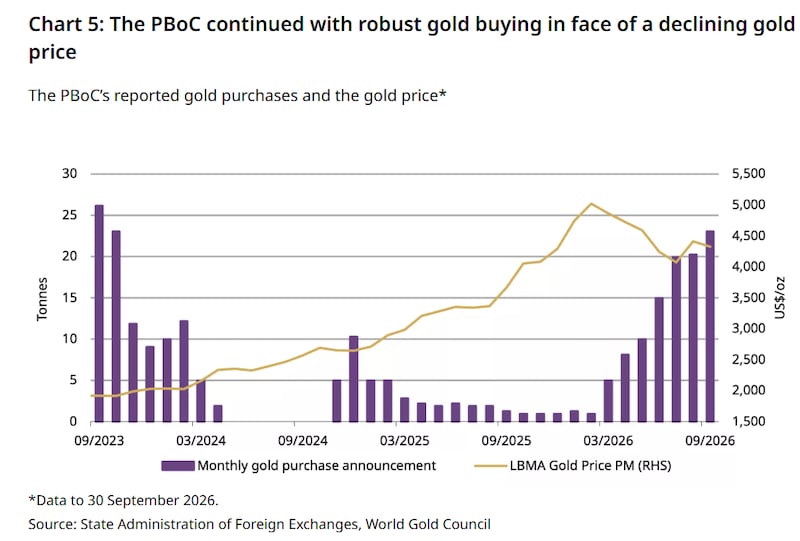
The People’s Bank of China (PBoC) has been a huge buyer of gold and has been a net buyer for the last 23 months. What is interesting is that the PBoC has been increasing its official purchases sharply as gold has fallen in price since January 2026.
In the graph below, the purple bars (PBoC net purchases) have been rising every month since gold started its decline in January 2026.
It’s not just central banks that have been increasing their purchases, but also retail and institutional investors. In the graph below, the blue shaded line represents the total known ETF holdings of gold.
This is essentially the sum of all gold troy ounces held in all gold ETFs in the world. The number of ounces held in ETFs is independent of the price of gold.
The gold ounces held in gold ETFs shows a decline from 2020 to mid-2024 (section 1 of graph) as the gold price (gold line) was generally consolidating a bit below to a bit above $2,000.
In this time period, investors lost interest in gold as it was moving sideways at the same time the North American stock markets were moving higher, providing a better investment alternative.
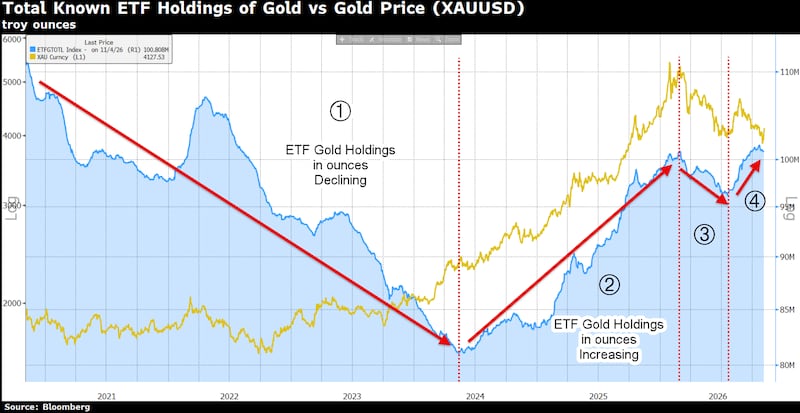
In section 2 of the graph, from mid-2023 to early 2026, investors were increasing their buying of gold ETFs as the price of gold was increasing. In section 3 of the graph, from early 2026 to mid-2026 investors once again became net sellers, as the price of gold declined.
Section 4 of the graph is different compared to the previous sections. It shows that investors have been net buyers of gold, even as the price of gold has been declining. This has happened before but is not the typical behaviour for investors. Typically, investors are net sellers of gold ETFs when gold is declining.
The price of gold is set in many markets with different buyers. With central banks continuing to be net buyers of gold and retail and institutional investors showing increasing interest in buying gold, this is building a good foundation for gold to move higher.
Increased buying from these groups does not ensure that gold will move higher in price, but it is setting the conditions for gold to perform well when other variables turn favourable.
For example, if the U.S. dollar or interest rates decline this could be the catalyst for further buying to push the price of gold higher.
The views and opinions expressed herein are solely those of the author(s) and may not necessarily reflect the views of Global X Investments Canada Inc. All comments, opinions and views expressed are generally based on information available as of the date of publication and should not be considered advice to purchase or sell any securities mentioned. Before making any investment decision, please consult your investment advisor or advisors.

