Disseminated on behalf of: Homerun Resources Inc.
- China dominates global solar glass production through low-cost, antimony-doped manufacturing, leaving solar module makers worldwide dependent on a material that is toxic, difficult to recycle, and increasingly at odds with clean energy regulations.
- Homerun Resources has begun generating revenue from industrial silica sand sales and expects to deliver a bankable feasibility study for Latin America’s first antimony-free solar glass facility within weeks, with financing parties including Brazil’s BNDES and a German export credit agency already at the table.
- Homerun and the University of California, Davis (UCD) have filed a patent for a process that produces high-purity fused silica glass from raw silica in a single step, a potential breakthrough for photonics and quantum computing markets where the material commands thousands of dollars per tonne.
The global energy transition runs on materials and silica, ordinary sand at its most basic, sits at the centre of more than most investors realize. Solar panels need it. Fibre optic cables that carry the internet are made of it. Wind turbine blades are stiffened with it. Processors in every smartphone contain it. Strip silica from modern life and, as Homerun Resources Inc.’s (TSXV: HMR | OTC: HMRFF | FSE: 5ZE) CEO Brian Leeners puts it, “We would not be online right now, there would be no internet, no glass in your windows, no processors in your phone.”
Yet despite that centrality, the global solar glass market remains almost entirely in the hands of Chinese companies, built on low-grade silica feedstock, compensated with the toxic additive antimony, and sold into a market with few credible alternatives. That dynamic is drawing regulatory scrutiny on both sides of the Atlantic and creating an opening for producers with a fundamentally different starting point. That is the gap Homerun is working to close.
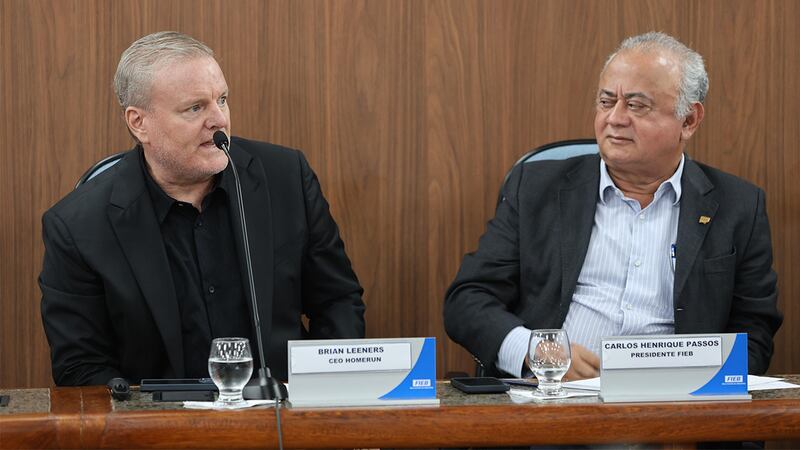
If it was a 100-metre race, we’re on the 80-metre mark, and everybody else is sitting at the starting gate.
— Brian Leeners, CEO, Homerun Resources Inc.
The antimony problem nobody talks about
Solar glass made with antimony is, by most practical measures, non-recyclable. A fact that sits awkwardly alongside the clean energy narrative built around solar modules. Antimony is what allows Chinese producers to compensate for the high iron content in their silica feedstock: it enables low-grade silica to perform in a solar module. It is also toxic, subject to tightening restrictions in both the United States and Europe, and deeply unwelcome in any downstream recycling stream. “Nobody who produces glass wants to be connected with antimony,” Leeners says. “Heineken’s not going to buy recycled solar glass and put it in its beer bottles, that’s going to be a horrible headline.”
The result is large stockpiles of decommissioned solar glass sitting unprocessed across multiple markets, and a policy problem governments on both sides of the Atlantic are actively trying to solve. Europe and the United States want to mandate antimony removal from solar manufacturing, but face a single obstacle: China remains their only source of solar glass. “If they have a new source of solar glass,” Leeners says, “then they can ban antimony, which is what they actually want to do.” Homerun is positioning itself as that new source.
An 80-metre head start
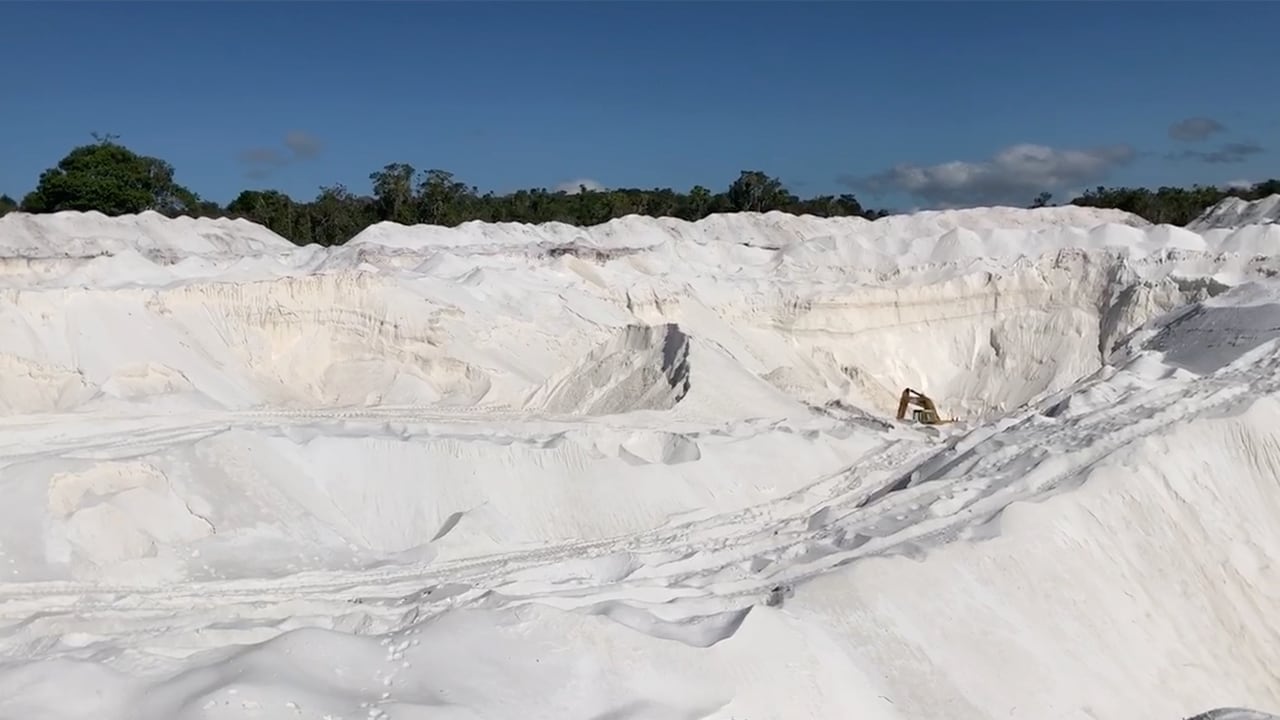
The company’s competitive advantage begins underground, at its Santa Maria Eterna silica project in Brazil’s Bahia state. The deposit is distinguished by naturally low metal impurity levels, iron in particular, which is precisely what makes silica suitable for high-value applications in solar glass, photonics, and advanced materials. Where other producers must start with inferior feedstock and process aggressively to remove contaminants, Homerun is already most of the way there.
“If it was a 100-metre race, we’re on the 80-metre mark, and everybody else is sitting at the starting gate,” says Leeners. “It’s extremely easy for us to finish that last 20 metres before they even get out of the starting gate.” Even Chinese producers, who rely on cheap energy to process low-grade feedstock up to usable quality, are beginning to face policy headwinds domestically. “China is actually going to be a potential customer as well for us,” he adds.
That head start also positions the company competitively in terms of cost. The solar glass facility is being built in Brazil, where capital and operating expenditures are materially lower than in Canada, Europe, or the United States, providing a structural advantage.
Why the feasibility study changes everything
The most immediate catalyst for investors is the forthcoming bankable feasibility study (BFS) for the solar glass plant, expected within weeks. The facility would be Latin America’s first dedicated solar glass manufacturing plant, and only the second antimony-free solar glass facility in the world. Demand is already taking shape ahead of that milestone: the company has secured a five-fold increase in its solar glass offtake agreement with Sengi Solar, bringing committed offtake to 100,000 tonnes per year at US$750 per tonne. Several financing parties are already in discussions, including Brazil’s national development bank BNDES and a German export credit agency tied to equipment financing through the company’s glass technology partner, SORG Group of Germany. Total capital requirements are estimated at approximately US$300 million, manageable by project standards, and relatively affordable given the Brazilian construction environment.
Leeners frames the BFS as a structural inflection point for the stock. “Right now, we’re a $50-million U.S. company from a market cap perspective,” he says. “When we’re a full production solar glass company, one vertical, the valuation on that using conservative metrics is US$1 billion.” That is before accounting for the company’s energy storage or advanced materials divisions, each of which Leeners believes holds standalone unicorn potential.
The broader valuation logic follows a familiar pattern in the resource sector. A positive BFS converts a development narrative into a financeable project. If Leeners’ read of the Lassonde curve is correct, markets will begin pricing the distance between a $50-million company and a $1-billion asset well before the first tonne of solar glass ships.
Why photonics gives Homerun a second act
While the solar glass story commands the most immediate investor attention, Homerun’s collaboration with the University of California Davis (UCD) may prove equally significant over the medium term. Working together, the two institutions have achieved the production of fused silica glass from raw silica in a single step, a process that traditionally requires five to ten steps depending on feedstock quality. An initial patent application has been filed from work already completed with UCD. Scaling trials are now the next priority.
The addressable markets are substantial. High-purity fused silica is essential for fibre optic production, high-end optics, electric steel manufacturing, and increasingly, the photonic components that underpin quantum computing and AI data processing. NVIDIA has recently made significant investments in two photonics companies, a directional signal Leeners views as confirmation that photonics, not copper interconnects, is the future of high-volume data movement within AI infrastructure.
“Quantum computing with photonics sitting over silicon is the future,” says Leeners. “And if you look at NVIDIA, they’ve just made two massive investments into photonics companies. That should tell everybody where processing data related to AI is going.”
Three verticals, one resource, and a valuation gap worth watching
Homerun has now crossed its first commercial threshold: revenue has begun flowing from industrial silica sand sales under a newly announced sales and distribution agreement. That shifts the narrative from exploration-stage to early-stage producer, a distinction that matters to institutional investors in particular.
The company also holds an option to license the global intellectual property of a sand-based thermal energy storage system developed by the National Renewable Energy Laboratory (NREL). The system is notable because the stored silica medium is simultaneously a commercial byproduct, making it the only long-duration energy storage platform with a built-in ancillary revenue stream. Prospective deployment sites include industrial and mine operations, urban district heating networks, and behind-the-metre energy management for data centres facing looming utility capacity constraints.
The BFS is the near-term unlock. In Leeners’ three- to five-year vision, each of the company’s three verticals (silica, solar glass, and energy storage) becomes a billion-dollar business in its own right. “My goal is that each of those three has the potential to be a standalone unicorn,” he says.
The starting point is a $50-million market cap and a feasibility study weeks away from landing.
To learn more about Homerun Resources, visit their website or follow them on social media: LinkedIn, X and Facebook.

