HONG KONG (AP) — World shares were mixed on Wednesday following losses on Wall Street, while oil prices gained more than 3 per cent on uncertainties over when the war in Iran will end.
The futures for the S&P 500 and the Dow Jones Industrial Average edged less than 0.1 per cent higher.
The Federal Reserve was expected to keep its key interest rate unchanged at 3.6 per cent as it wraps up a policy meeting later Wednesday. Most policymakers believe at that level, the rate can still cool inflation by slowing borrowing and spending, but not so much that it will drag down hiring or raise unemployment.
In early European trading, Britain’s FTSE 100 slipped 0.6 per cent to 10,269.06. Germany’s DAX traded 0.3 per cent lower at 23,958.39, while France’s CAC 40 dropped 0.6 per cent to 8,054.38.
Markets in Japan were closed for a holiday.
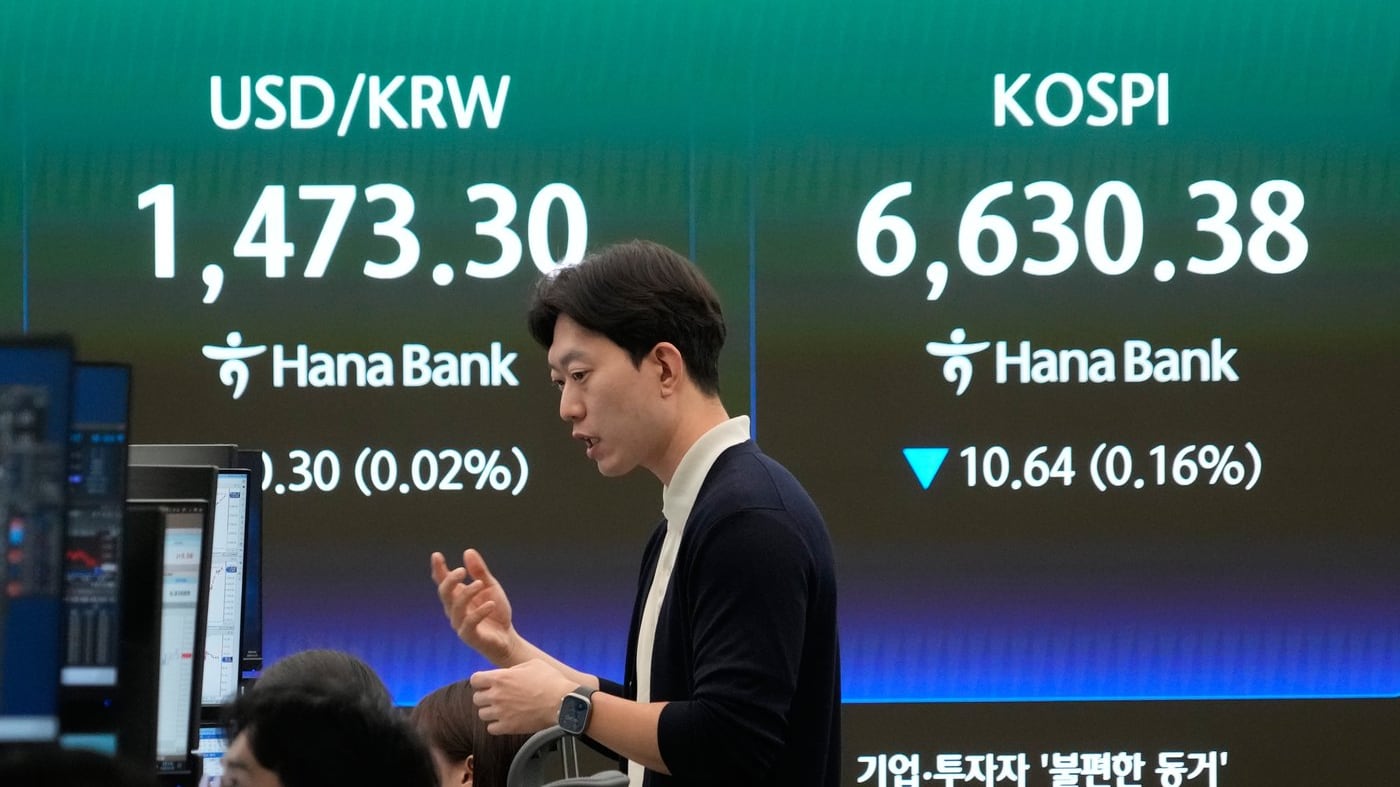
Elsewhere in Asia, South Korea’s Kospi rose 0.8 per cent to 6,690.90 and the Hang Seng in Hong Kong gained 1.7 per cent to 26,111.84. The Shanghai Composite index rose 0.7 per cent to 4,107.51.
Australia’s S&P/ASX 200 slipped 0.3 per cent to 8,687.00.
Taiwan’s Taiex lost 0.6 per cent, and India’s Sensex gained 0.9 per cent.
The price of a barrel of Brent crude oil to be delivered in June rose 3.1 per cent to US$114.70 early Wednesday. Brent to be delivered in July was also up 3 per cent, at US$107.61. Brent oil was trading around US$70 per barrel before the war began in late February.
Benchmark U.S. crude gained 3.4 per cent to US$103.32 a barrel.
The UAE’s announcement Tuesday that it was leaving OPEC as of Friday was being closely watched by oil markets. OPEC accounts for roughly 40 per cent of global oil output, and the UAE is one of its largest oil producers. The UAE has resisted OPEC production quotas in recent years, wanting to sell more oil to the rest of the world.
Initially oil prices fell on expectations that supply will rise.
“The UAE’s exit will increase (oil) output,” ING Bank strategists Warren Patterson and Ewa Manthey wrote in a research note on Wednesday. “The UAE has been increasingly frustrated over recent years by its output being constrained by OPEC production quotas, which have kept it well below its potential.”
“However, before this can be tapped, there must be a resolution in the Persian Gulf that allows for uninhibited energy flows through the Strait of Hormuz once again,” they added.
As U.S.-Iran negotiations for a permanent end to the Iran war remain stalled and the Strait of Hormuz, where roughly one fifth of the world’s oil passed through before the war, was still largely closed. Short term impacts on oil prices still depend mainly on prospects for reopening the waterway, analysts said.
Iran has offered to reopen the Strait of Hormuz if the United States lifts a blockade on its ports. So far, the U.S. appears to be ruling out a deal that excludes the Islamic Republic’s nuclear program.
On Tuesday, Wall Street retreated from its recent record highs. The benchmark S&P 500 fell 0.5 per cent and the Dow industrials edged 0.1 per cent lower. The technology-heavy Nasdaq composite dropped 0.9 per cent.
Artificial intelligence -related stocks led the losses. Chip company Broadcom lost 4.4 per cent, Nvidia fell 1.6 per cent and Micron Technology lost 3.9 per cent. Alphabet, Amazon, Microsoft and Meta Platforms are reporting quarterly results on Wednesday.
In other dealings early Wednesday, the U.S. dollar rose to 159.77 Japanese yen from 159.62 yen. The euro was trading at US$1.1701, down from US$1.1712.
Chan Ho-him, The Associated Press.

