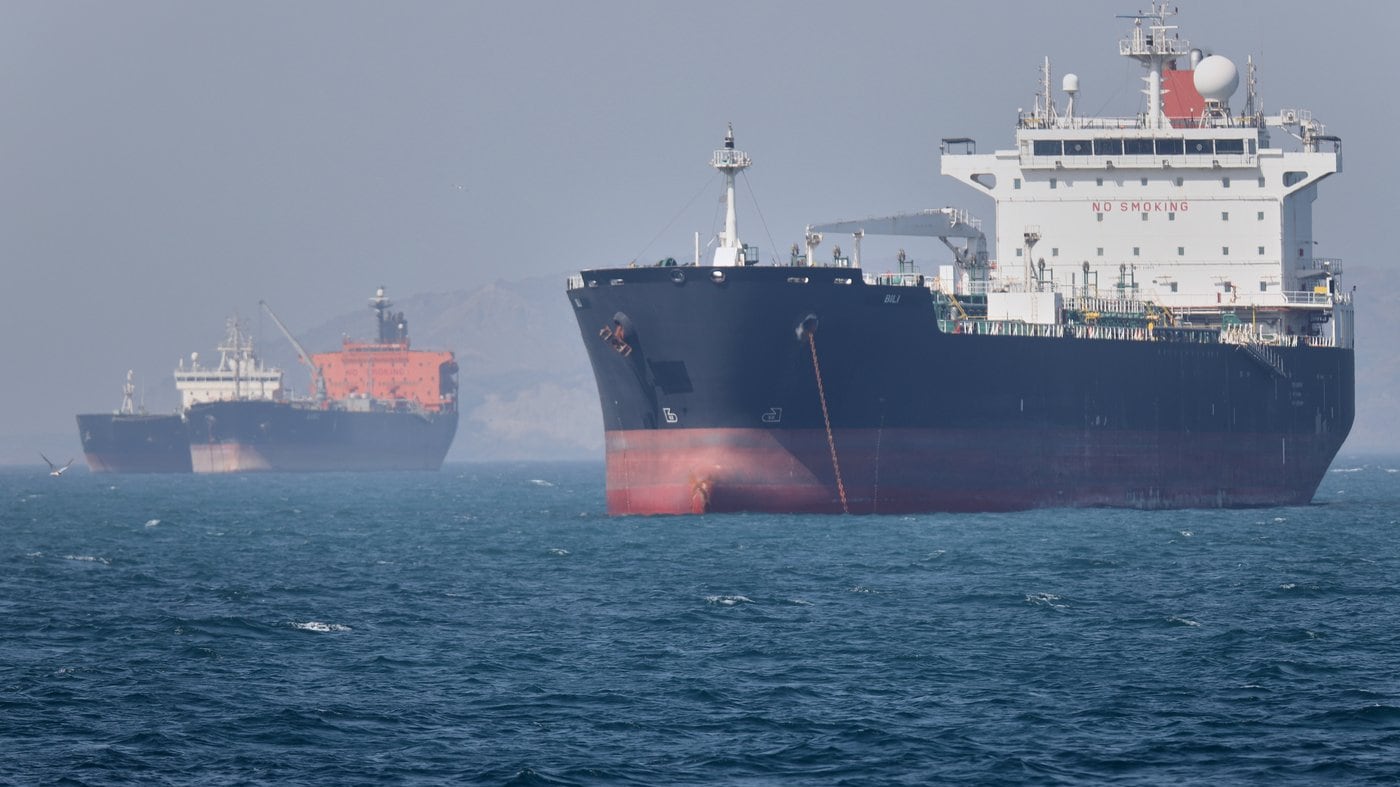
LONDON — The oil market will move into a significant supply surplus in 2027 after recovering from the closure of the Strait of Hormuz, the International Energy Agency said in its monthly oil market report on Wednesday.
The U.S. has announced an interim agreement to end the Iran war, which includes Iran reopening the strait and the U.S. lifting its naval blockade of Iran, potentially bringing an end to the largest oil supply disruption in history.
The war is estimated to have blocked more than 14 million barrels per day (bpd) of Middle East oil output according to the IEA.
The oil market will then fall into a significant supply surplus next year, the IEA said in its first look at 2027, as supply is set to surge by 8 million bpd while demand rises by 2 million bpd.
A large supply surplus in 2027 could “provide a welcome respite to the market and an opportunity to replenish depleted inventories, or to build new strategic reserves, as countries review their energy strategies and policies in response to the crisis,” the IEA said.
MIDDLE EAST SUPPLY ALREADY RISING
Flows through the strait were already rising by early June because of a pick-up in ship-to-ship transfers in the Gulf of Oman, the IEA said, helping to boost total Middle East flows to around 12 million bpd from a May low of 9.6 million bpd.
“If the deal holds, exports and production from the Gulf should see a gradual recovery – not least because Iranian oil exports can fully resume once the U.S. blockade is lifted,” the agency, which advises industrialized countries, said.
However, political and operational constraints, including prolonged demining and unresolved transit arrangements, leave downside risks to the Middle East recovery outlook, the IEA said.
Overall, the IEA forecasts oil supply to fall by 3.9 million bpd in 2026, as production losses in the Middle East outpace rising output from the Americas.
Russian crude oil and refined fuel exports were stable at around 7.4 million bpd in May despite continued Ukrainian drone attacks on refineries, the IEA said, though the attacks forced Russia to prioritize fuel supply to the domestic market and to maximize crude oil exports.
Oil prices were trading slightly higher on Wednesday, with Brent futures at $79.32 a barrel at 1125 GMT, up by 36 cents from the previous close and up 74 cents from where they were trading just before the report was published at 0759 GMT.
DEMAND DESTRUCTION SPREADS
Global oil demand will fall by 1.1 million bpd this year according to the IEA, after a 5 million bpd April-June drop.
Demand destruction has spread beyond the areas that were initially most impacted by the Iran war, the IEA said, with deliveries of all major fuels and especially gasoil “showing signs of strain across almost all regions.”
Demand will then recover swiftly and grow next year, as falling oil prices and an improving economic outlook drive the rebound, the IEA said.
In its own monthly report, rival forecaster OPEC lowered its forecast for oil demand growth in 2026 to 970,000 barrels per day.
LARGE SURPLUS LOOMS IN 2027
The IEA forecasts imply that supply will come in around 920,000 bpd below total demand in 2026, according to Reuters’ calculations, narrowing from a 1.78 million bpd deficit in the previous month’s report.
The IEA’s 2027 forecasts imply that supply will outweigh demand by 5.05 million bpd next year, as demand growth is overshadowed by supply ramping up as Middle East barrels return.
That is larger than the 2026 that IEA had previously forecast, which in its November 2025 report it pinned at 4.09 million bpd.
However, oil inventories could plunge further to historic lows before the market balance is able to shift to a surplus towards the end of this year, the IEA said.
Inventories have fallen at a rate of 3.8 million bpd since the start of the war on February 28, with stock draws in May alone at around 4.6 million bpd, according to preliminary IEA data.
(Reporting by Robert Harvey in London; editing by Tomasz Janowski and Jason Neely)

