A week after the U.S. Supreme Court struck down U.S. President Donald Trump’s global “reciprocal” tariffs, it’s still unclear how – or if – the money his administration already collected from the levies will be refunded.
“At this point, there are more questions than answers,” Mahmood Nanji, fellow at the Centre for Policy & Management at Western University’s Ivey Business School, told CTV Your Morning on Friday.
“But this is going to be a long, protracted, messy, complicated process with lots of litigation.”
In its ruling, the Supreme Court did not specifically address the issue of whether or not the estimated US$175 billion in proceeds already collected from the tariffs would need to be refunded; something Trump mentioned following Friday’s decision.
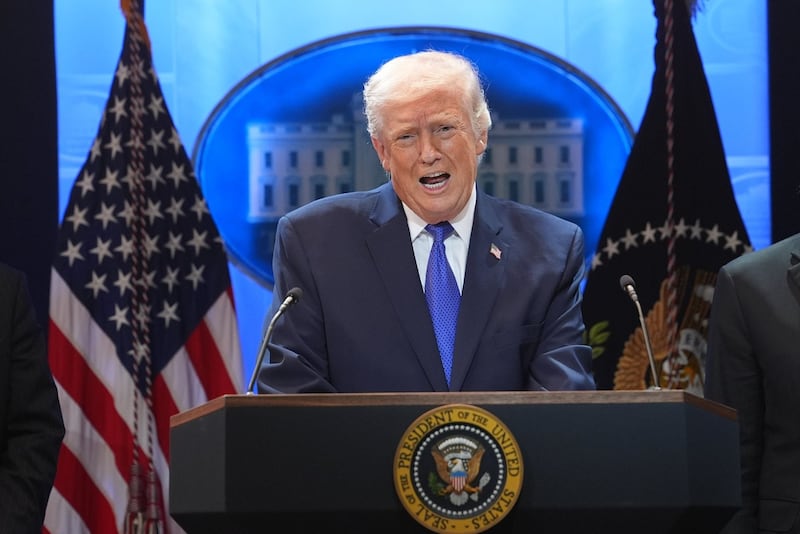
“Wouldn’t you think they would have put one sentence in there saying, ‘keep the money’ or ‘don’t keep the money,’ right?” Trump told reporters in Washington. “I guess it has to get litigated for the next two years.”
Nanji noted that for the roughly 300,000 U.S. businesses that were subjected to tariffs from the time they were announced in April on Trump’s “Liberation Day,” to earlier this week when the U.S. Customs and Border Protection agency stopped collecting them, there’s a lot at stake.
“The other issue which is outstanding here is: who actually gets this refund? Is it the businesses, or is it actually the consumers? And then finally, we’ve heard the Trump administration saying that they’re really going to fight this,” he said.
Whatever is ultimately decided will likely take years to iron out, Nanji said, adding that court cases related to the issue are likely to find their way back to the Supreme Court eventually, which will take “at least a couple of years.”
One thing the Trump administration is likely to argue, he said, is that if corporations who were charged higher prices due to tariffs ended up passing those costs on to consumers, then corporate refunds would simply be enriching those companies.
“That’s something probably the Trump administration doesn’t want to do … I think it’s going to be a long process,” said Nanji.

