A vast majority of Canadians, eight out of 10, still believe boycotting American goods and travel to the U.S. is helpful in strengthening Canada’s bargaining position, according to a new survey by Nanos for CTV News.
Fifty-three per cent of respondents believe a boycott is helpful, while 29 per cent believe it’s somewhat helpful.
That’s largely unchanged from six months ago when Nanos asked respondents the same question – 54 per cent found it “helpful” and 26 per cent “somewhat helpful.” Just 10.5 per cent of respondents think avoiding U.S. goods and travel is “not helpful” to Canada’s bargaining position.
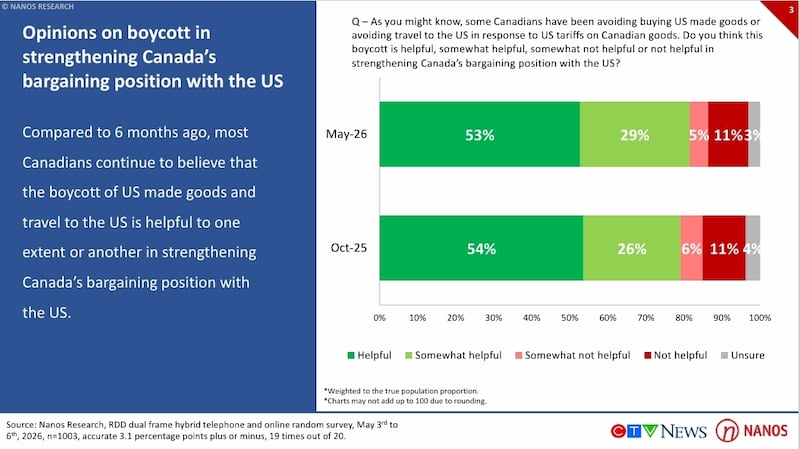
“Canadians remain firm in their boycott of American goods,” Nik Nanos told CTV News. “And I think a lot of this has to do with the fact that there hasn’t really been significant progress in the trade discussions with the U.S.. So I think for average Canadians, it’s like, ‘why should we stop boycotting American goods?’”
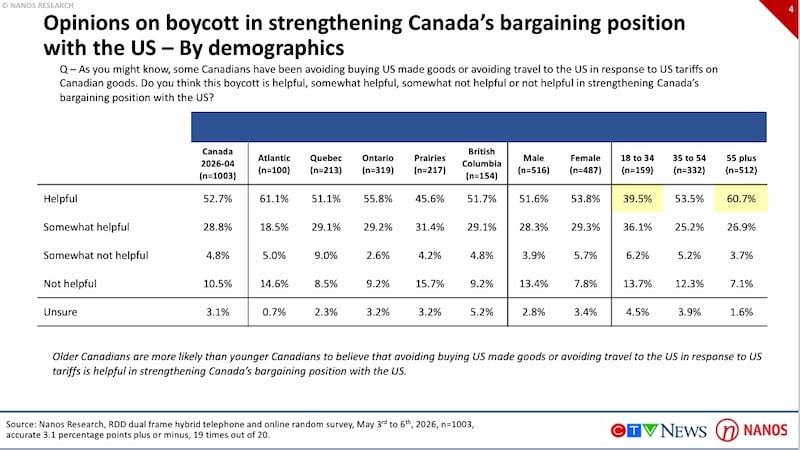
Nanos Research found a generational difference, with older Canadians more likely to believe a boycott is helpful to strengthening Canada’s position. Among those aged 55 and older, 60.7 per cent of respondents believe a boycott would be “helpful,” compared to 39.5 per cent of those 18 to 34, and 53.5 per cent of those 35 to 54.
U.S. liquor called ‘innocent bystander in trade war’
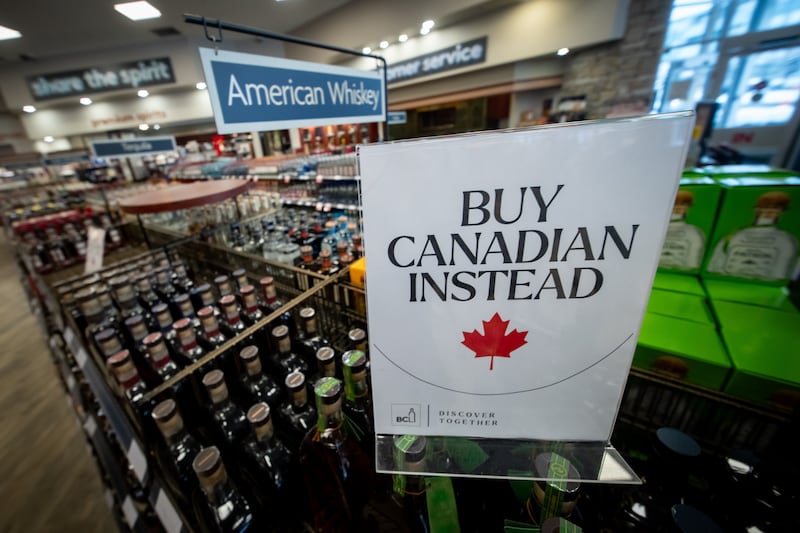
Most provinces have stopped buying American alcohol, which the U.S. administration has made clear is an irritant in trade talks.
This week, the head of the Distilled Spirits Council of the United States testified at an Office of the United States Trade Representative committee that liquor exports to Canada dropped by 63 per cent in 2025, with distilleries losing almost 1,000 jobs between September 2024 to September 2025.
“Small craft distilleries in the United States are feeling that pressure. Some of them are starting to shut down, where they looked at the Canadian market as a huge opportunity,” Chris Swonger told CTV News Channel on Thursday following the testimony.
He called his industry an “innocent bystander” in the trade war.
Most people CTV News stopped outside an Ottawa liquor store were in favour of a continued boycott.
“It gives us leverage. We can’t give that up,” Pierre Emond said, adding that even if they brought back American liquor, he wouldn’t buy it.
Sporting a hat that said “Memphis,” he acknowledged the situation the countries is complicated. Emond’s own brother was born in the United States and is a dual citizen. He spoke fondly of two trips to Memphis, with a hope he can return one day to visit other tourist sites like the Grand Canyon.
“There’s lots of places I’d like to see in the States, but I’m not going back until this thing is over,” Emond said.
Don Osborne told us he continues to avoid American products at the grocery store, even if it costs a little more.
“They’re losing an awful lot of money and it’s hurting them, and one of these days they’ll wake up and pay attention,” Osborne said, urging provinces to keep up the liquor boycotts.
Nanos Research conducted the survey of 1,003 Canadians between May 3, to May 6. The margin of error is ±3.1 percentage points, 19 times out of 20.

