OTTAWA — Prime Minister Mark Carney on Wednesday signalled he doesn’t want to use Canadian energy as a bargaining chip in the ongoing trade war with the United States, though he wouldn’t explicitly rule it out.
“I don’t see the value of doing (it),” Carney told reporters in Red Deer, Alta., following an announcement with Alberta Premier Danielle Smith. “I mean, I can understand conceptually, but I don’t see the value.”
Carney also said: “Being a reliable supplier is important.”
“People trust us,” he added. “And so, when you’re supplier of a key commodity, (a) key service, you’ve got to think really hard about not supplying. So that very much colours it.”
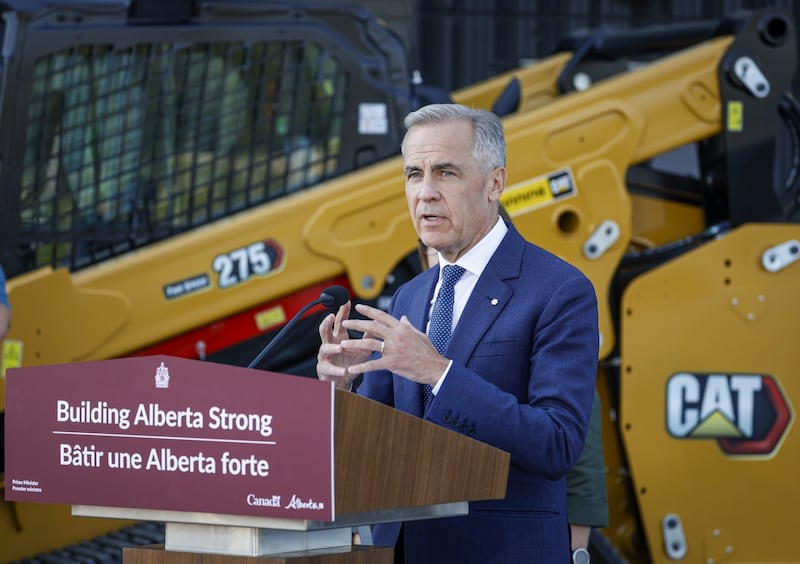
The prime minister emphasized that his government’s focus is on securing a deal with the United States.
The Canada-United States-Mexico Agreement, or CUSMA, is now subject to an annual review process after U.S. President Donald Trump declined to renew it earlier this month.
And, while the U.S. and Mexico have held several official negotiating meetings, Canada and the United States have yet to formally launch talks.
The trade war, meanwhile, is nearing the 18-month mark, and Trump has reinvigorated threats to slap a slate of tariffs on Canadian goods, in response to what he’s categorized as discriminatory trade policies and wildfire smoke crossing the border.
Those new tariffs related to discriminatory trade policies are expected to come into effect in three weeks on Aug. 19.
Some premiers support leveraging energy
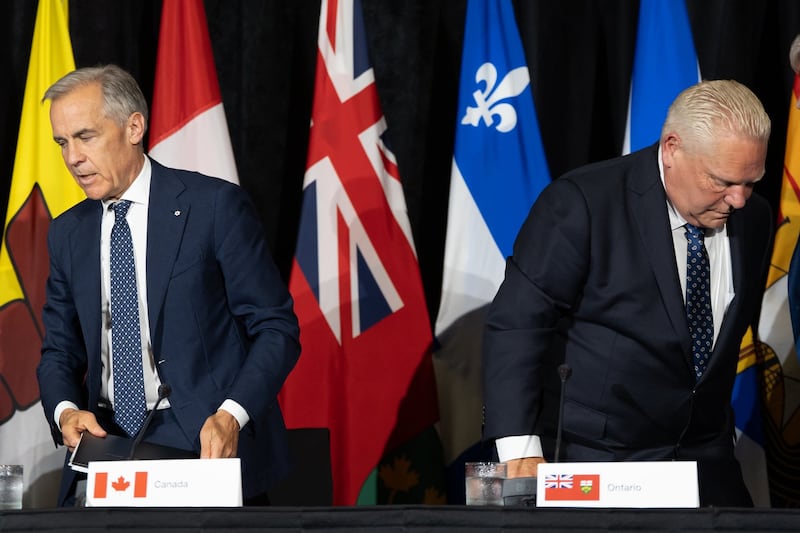
The idea of leveraging Canadian energy and using it as a bargaining chip in negotiations was also raised at last week’s meeting of provincial and territorial premiers in Charlottetown.
While Alberta and Saskatchewan shut the door on the prospect, the premiers of New Brunswick, Quebec and Ontario said everything should be on the table.
The threat is not new from Ontario Premier Doug Ford, who threatened in the early days of the trade war in spring 2025 to “turn off the lights” to the 1.5 million Americans who use energy imported from his province.
New Brunswick Premier Susan Holt also signalled this week she’s still open to the idea, saying her government is “willing to do whatever it takes to help Canada get the deal,” seemingly including potentially using the energy her province exports to New England in the negotiations.
When asked to give a “yes” or “no” answer whether he’s willing to use Canadian energy as a bargaining chip, Carney wouldn’t directly say.
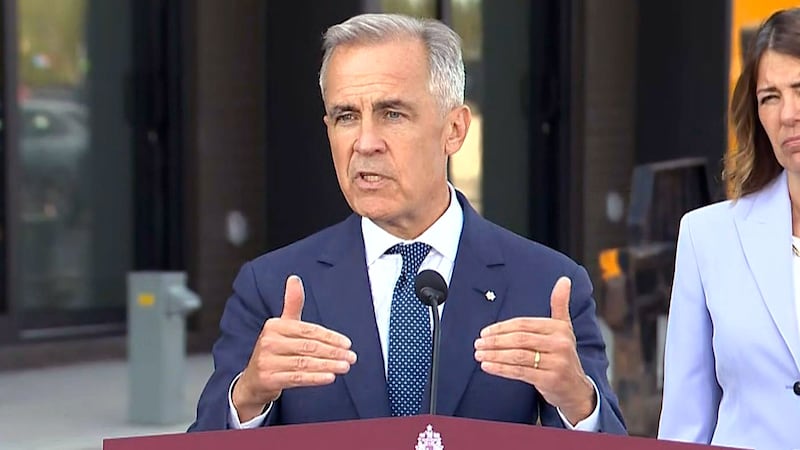
“First and foremost, we’re engaged in those negotiations to look to find a mutually beneficial solution, and we’re only going to accept a solution that works for Canadians,” he said. “We have lots of options of what we would do if that’s not there, both positive in terms of supporting the economy, and also addressing other issues.”
“But I’m not going to be drawn on what we’re going to do,” he added. “We’re going to focus now on building towards an agreement, if an agreement is possible.”
Last week, following Trump’s latest tariff threat, Carney said Canada would “intensify” trade talks.
Amid those heightened tensions, Canada-U.S. Trade Minister Dominic LeBlanc and Canada’s chief trade negotiator to the United States Janice Charette were in Washington this week. LeBlanc later wrote in a post to social media on Wednesday afternoon that the two met with U.S. Trade Representative Jamieson Greer.
With files from CTV News’ Rachel Aiello, Stephanie Ha, Abigail Bimman and Anna Mandin

