


There’s “no urgency” to strike a trade deal with Canada, according to Washington’s trade representative, as Canada continues to supply a variety of key exports to the U.S.
U.S. Trade Representative Jamieson Greer made the comments to American network CNBC Friday morning when asked about progress toward a deal with Canada. He said U.S. President Donald Trump is “comfortable” with the present situation as the two countries scrap through a protracted trade war.
“Our trade policy is a global policy,” he said. “It applies to Canada, China, the U.K., Brazil, all kinds of countries,” he said.
While the U.S. does have global tariffs in place – like the so-called Section 232 levies on steel and aluminum, which apply to most countries – it has also imposed country-specific measures, including on Canada.
For example, over the summer, Trump announced 50 per cent tariffs on a variety of Canadian goods. He has also struck a number of trade deals that circumvent his global levies, like his accord with the U.K., which adjusts those Section 232 tariffs.
Greer said his team is still having “good conversations” with the Canadians even after trade talks broke down in August. Prime Minister Mark Carney pulled his negotiators home from Washington after he said the Americans introduced last-minute, unacceptable terms.
The U.S. has blamed Canada for the impasse. On Friday, Greer said, “We gave them a deal, they left.”
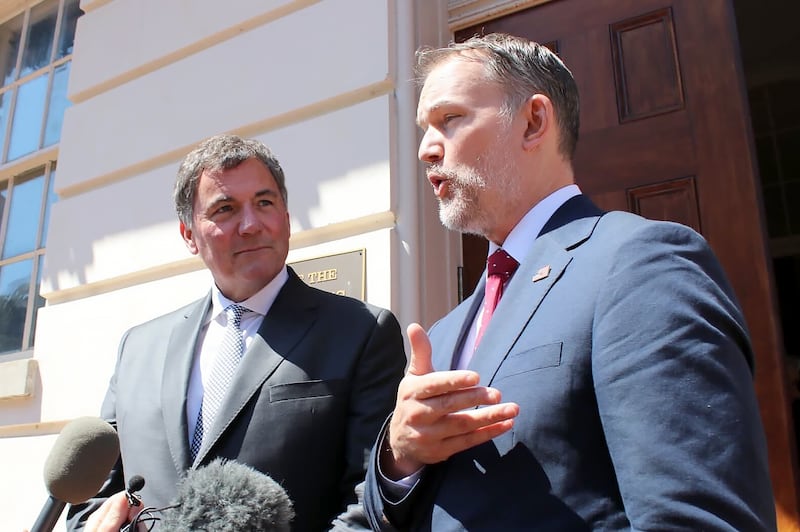
So far, those good conversations have not resulted in a deal, though Greer said the Trump administration is not in a rush to strike one.
“We’re still getting what we need from them in terms of oil, gas, potash,” he told CNBC. “We’re shipping (agriculture) back and forth across the border.”
Canada exported US$234-billion worth of goods to the U.S. from January to July this year, according to the most recent data from the U.S. Census Bureau, and imported US$205 billion.
In 2024, prior to Trump’s second term, Canada exported US$241 billion during the same period, and imported US$205 billion.
“There’s still a lot of strong trade between the two countries. We’re comfortable with where we are,” Greer also said.
Oil, gas and potash
Greer highlighted three products – oil, gas and potash – that are among the most important pillars of Canada-U.S. collaboration. They’ve also come into the spotlight repeatedly as the two countries wage economic warfare.
In 2025, Canada provided 63 per cent of the crude oil and nearly 100 per cent of the natural gas imported by the U.S., according to a market snapshot released in May.
Some prominent voices in the Canadian political sphere have called on the federal government to use energy exports as a bargaining chip in trade negotiations.
Among them was Jason Kenney, the former premier of oil-rich Alberta, who said Americans would be sensitive to export taxes on fuel and potash.
“(That) would affect Republicans who drive F-150s and lay fertilizer on their farm fields,” he told The Canadian Press in an interview.
On the other hand, tapping the energy sector as a negotiating lever is a path to “mutually assured destruction,” according to Trans Mountain CEO Mark Maki. Carney has said he doesn’t see the value of bringing energy to the negotiating table.
Canadian potash, meanwhile, seems to be on Trump’s mind.
Potash is a group of minerals and chemicals containing potassium, which is an important ingredient in fertilizer. To a much lesser extent, it’s also used in detergents, ceramics and pharmaceuticals.
Canada is the world’s largest producer of potash, responsible for about 39 per cent of global exports. About half of Canada’s exported potash went to the U.S. in 2024, amounting to around 23 million tonnes.
Trump in recent days suggested he was working on a “massive deal” to buy potash from Belarus for a cheaper price than Canada offers. Belarus, a country that Canada has sanctioned over its support for Russia’s invasion of Ukraine, is the world’s third-largest potash producer, according to 2024 numbers.
Trump has since said he plans to continue buying product from Canada.
With files from The Canadian Press

